Agentic Apps Are Reshaping Modern Medicine: From Diagnostics to Delivery
From Diagnostics to Delivery: How Agentic Apps Are Reshaping Modern Medicine
Medicine has always advanced by combining human expertise with better tools. Today, that next leap is being driven by agentic apps—software systems that do more than display information. They can reason through tasks, coordinate workflows, make context-aware recommendations, and help move care from diagnosis to treatment delivery faster and with fewer gaps.
In a healthcare environment where clinicians are overloaded and patients often face delays, agentic apps are emerging as a practical way to streamline modern medicine. They are not replacing doctors. Instead, they are helping medical teams act with greater speed, precision, and consistency.

What Makes Agentic Apps Different?
Traditional healthcare software tends to be reactive. It stores records, tracks appointments, or flags alerts after something has already happened. Agentic apps are different because they are designed to take initiative within defined boundaries.


These systems can:
- Gather data from multiple sources
- Identify patterns or risks
- Suggest next steps based on clinical rules
- Trigger workflows automatically
- Adapt as new information arrives
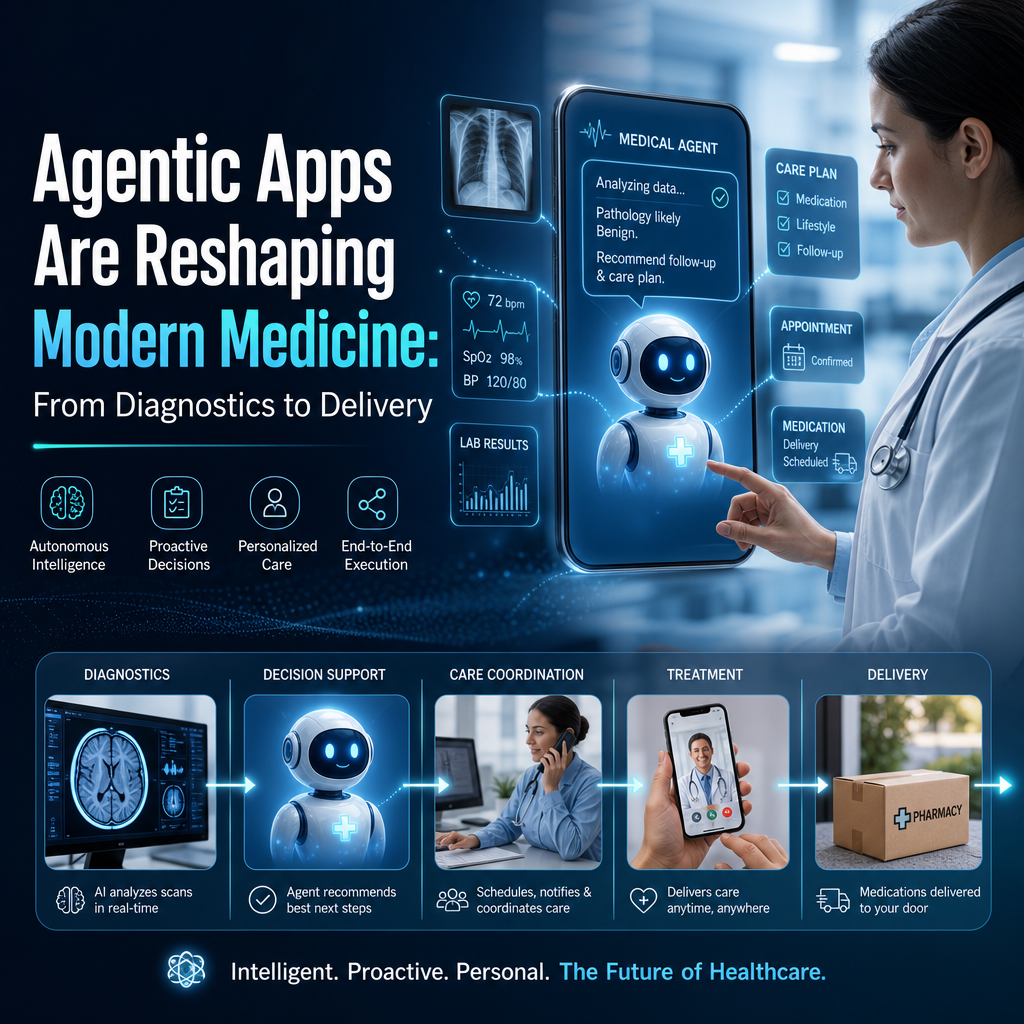
That means they can support a clinician not just at one stage of care, but across the full patient journey. From initial diagnostic support to post-treatment follow-up, agentic apps help reduce friction at every step.

Transforming the Diagnostic Process
One of the biggest opportunities for agentic apps is in diagnostics. Modern medicine produces a huge amount of data: lab results, imaging reports, wearable device readings, intake forms, and electronic health records. The challenge is not lack of data, but making sense of it quickly enough to guide action.
Agentic apps can assist by synthesizing information and highlighting what matters most. For example, they may:
- Detect concerning trends in lab values
- Prioritize high-risk patients for review
- Recommend additional tests based on symptom patterns
- Cross-check medications for possible interactions
- Surface missing information before a diagnosis is finalized
This kind of support does not remove human judgment. It enhances it. Clinicians still make the final call, but they do so with a clearer view of the patient’s condition and fewer opportunities for oversight.
Closing the Gap Between Diagnosis and Treatment
In many care settings, the biggest problem is not identifying a condition—it is ensuring that the right treatment happens quickly after diagnosis. Too often, patients leave with recommendations that are delayed by scheduling bottlenecks, fragmented communication, or follow-up failures.
Agentic apps help bridge that gap by coordinating next actions automatically. Once a diagnosis is made, the app can:
- Generate follow-up tasks for care teams
- Schedule appointments or reminders
- Send medication instructions to patients
- Monitor whether prescribed steps are completed
- Escalate unresolved issues when needed
This improves care continuity and reduces the risk that patients fall through the cracks. In chronic disease management especially, those small workflow improvements can have a major impact on outcomes.
Supporting Clinicians Without Burdening Them
Healthcare professionals are increasingly asked to do more with less time. Administrative tasks, documentation, and coordination work can take valuable energy away from direct patient care. Agentic apps can ease that burden by handling repetitive, rules-based processes in the background.
For example, they can:
- Draft visit summaries
- Organize prior authorization materials
- Alert staff when a referral is overdue
- Prepare patient education materials tailored to the diagnosis
- Track compliance with care pathways
By reducing clerical load, these apps give clinicians more time to focus on complex decisions, patient relationships, and hands-on treatment.
Improving Patient Engagement
Modern medicine depends not just on accurate diagnosis, but on what patients do after they leave the clinic. Many treatment plans fail because people misunderstand instructions, forget steps, or struggle to stay engaged.
Agentic apps can improve patient participation through timely, personalized support. They can send reminders, explain care plans in plain language, and prompt patients to report symptoms or complete tests. Some systems can even adjust communication based on the patient’s behavior, language preferences, or risk level.
This makes care feel more continuous and responsive. Instead of a one-time appointment, patients receive ongoing guidance that helps them stay on track.
Key Considerations: Safety, Trust, and Oversight
As promising as agentic apps are, they must be deployed carefully. In medicine, automation should always be paired with oversight. These systems need clear guardrails, strong data privacy protections, and transparent decision-making logic.
Important questions include:
- Who is responsible if the app makes an incorrect recommendation?
- How are clinical rules updated?
- Can clinicians override automated actions easily?
- Is patient data protected at every stage?
- Are the app’s suggestions explainable and auditable?
Trust is essential in healthcare. The most effective agentic apps will be the ones that earn it through reliability, transparency, and thoughtful human supervision.
The Future of Care Is More Connected
From diagnostics to delivery, agentic apps are reshaping modern medicine by making care faster, more coordinated, and more patient-centered. They help clinicians interpret information, reduce administrative strain, and move treatments forward with fewer delays.
The real value of this technology lies in connection: connecting data to decisions, decisions to action, and action to better outcomes. As healthcare continues to evolve, agentic apps may become one of the most important tools for turning modern medicine into truly responsive medicine.