
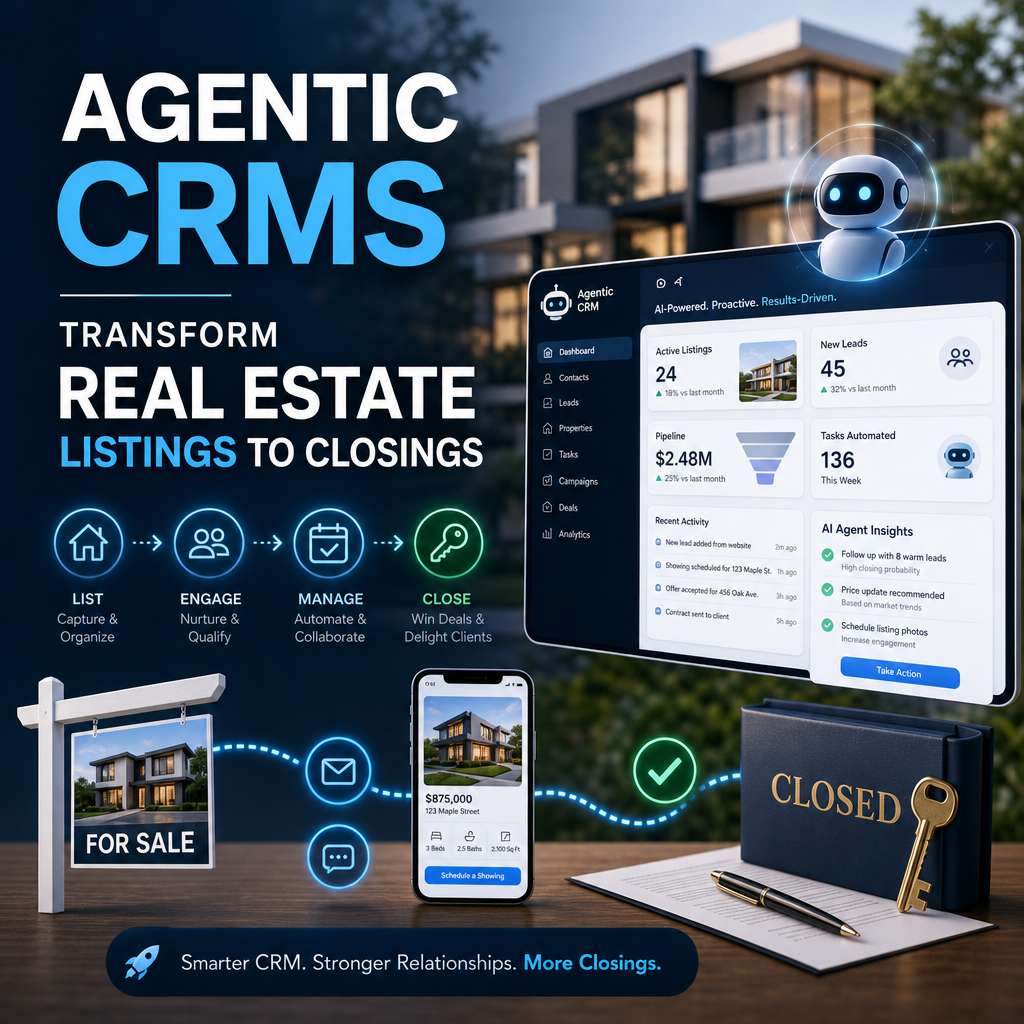
Agentic CRMs Transform Real Estate Listings to Closings
From Listings to Closings: How Agentic CRMs Are Transforming Real Estate
Real estate has always been a relationship business. Success depends on fast follow-up, strong communication, and knowing what each client needs at every stage of the journey. But as lead volume grows and client expectations rise, many agents find that traditional CRMs only solve part of the problem.
That is where agentic CRMs are changing the game. Instead of simply storing contacts and reminders, these smarter systems take action. They help agents move faster, stay organized, and guide more deals from first inquiry to final closing.

What Makes an Agentic CRM Different?
A traditional CRM is mostly a database. It keeps track of leads, notes, tasks, and appointments. Helpful? Absolutely. But it still depends on the agent to remember what to do next.

An agentic CRM goes further. It uses automation, AI, and decision-making logic to act on behalf of the agent. It can:
- Prioritize leads based on behavior and likelihood to convert
- Send personalized follow-ups automatically
- Trigger task reminders when a client reaches a new stage
- Surface listings that match a buyer’s search pattern
- Keep communication moving without constant manual input
In short, it doesn’t just organize work. It helps do the work.

Why Real Estate Teams Need a Smarter System
The real estate process is full of moving parts. A single deal may involve buyers, sellers, lenders, inspectors, attorneys, and contractors. Each step creates more messages, more tasks, and more chances for something to slip through the cracks.
That’s why agentic CRMs are becoming so valuable. They reduce the pressure on agents by handling repetitive work and keeping deals on track.
Key challenges they solve include:
- Slow response times to new leads
- Missed follow-ups after showings or open houses
- Inconsistent communication across team members
- Poor visibility into deal status
- Time wasted on manual admin work
When these issues are solved, agents have more time to focus on negotiation, client relationships, and closing business.
How Agentic CRMs Support the Full Sales Funnel
From the first listing to the final signature, every stage of the sales funnel benefits from more intelligent automation.
1. Lead capture and qualification
New leads often arrive from multiple sources: websites, social media, listing platforms, referrals, and paid ads. An agentic CRM can collect all of them in one place and sort them instantly.
It can also score leads based on signals such as:
- How quickly they responded
- Which properties they viewed
- Whether they opened emails
- How often they returned to the website
This helps agents focus on the most promising opportunities first.
2. Personalized nurturing
Not every lead is ready to buy or sell right away. Some need weeks or months of education and encouragement. Agentic CRMs keep those relationships alive with timely, relevant outreach.
Instead of sending generic follow-up messages, the system can tailor communication based on a client’s behavior and interests. That creates a more natural experience and keeps the agent top of mind.
3. Listing management
For sellers, speed and visibility matter. Agentic CRMs can help agents manage listing timelines, coordinate marketing tasks, and track every step of the sales process.
They can also remind teams when to:
- Schedule photography
- Publish listings
- Send weekly updates to sellers
- Review pricing strategy
- Prepare for open houses
That level of consistency can improve both client satisfaction and deal momentum.
4. Transaction support
Once a deal is in motion, many small tasks need attention. Deadlines, documents, inspection dates, and financing milestones all have to be managed carefully.
An agentic CRM can monitor the transaction flow and alert the team when action is needed. This reduces the risk of delays and makes the entire process smoother for everyone involved.
Benefits for Agents and Brokerages
The appeal of agentic CRMs goes beyond convenience. These platforms can directly improve performance across the business.
For individual agents:
- More time for selling and client care
- Faster response to new opportunities
- Better organization across listings and buyers
- Less stress from manual task tracking
For brokerages and teams:
- More consistent processes
- Better lead conversion rates
- Improved accountability
- Clearer pipeline visibility
- Stronger collaboration across departments
When the system handles routine steps, the team can operate with greater focus and efficiency.
The Human Touch Still Matters
Even the smartest CRM cannot replace trust, empathy, and expertise. Real estate is personal. People are making major financial and emotional decisions, and they want to work with someone who understands their goals.
That’s why the best use of agentic CRMs is not to remove the human element, but to support it. By automating repetitive work, agents gain more time for the conversations, advice, and negotiations that truly build loyalty.
The Future of Real Estate Is More Proactive
The real estate industry is moving toward systems that anticipate needs instead of waiting for commands. Agentic CRMs are at the center of that shift. They help agents stay ahead of the curve, respond faster, and manage more deals without sacrificing service quality.
From listings to closings, the entire process becomes more connected, more efficient, and more intelligent. For agents and brokerages ready to grow, that is not just an upgrade. It is a competitive advantage.