
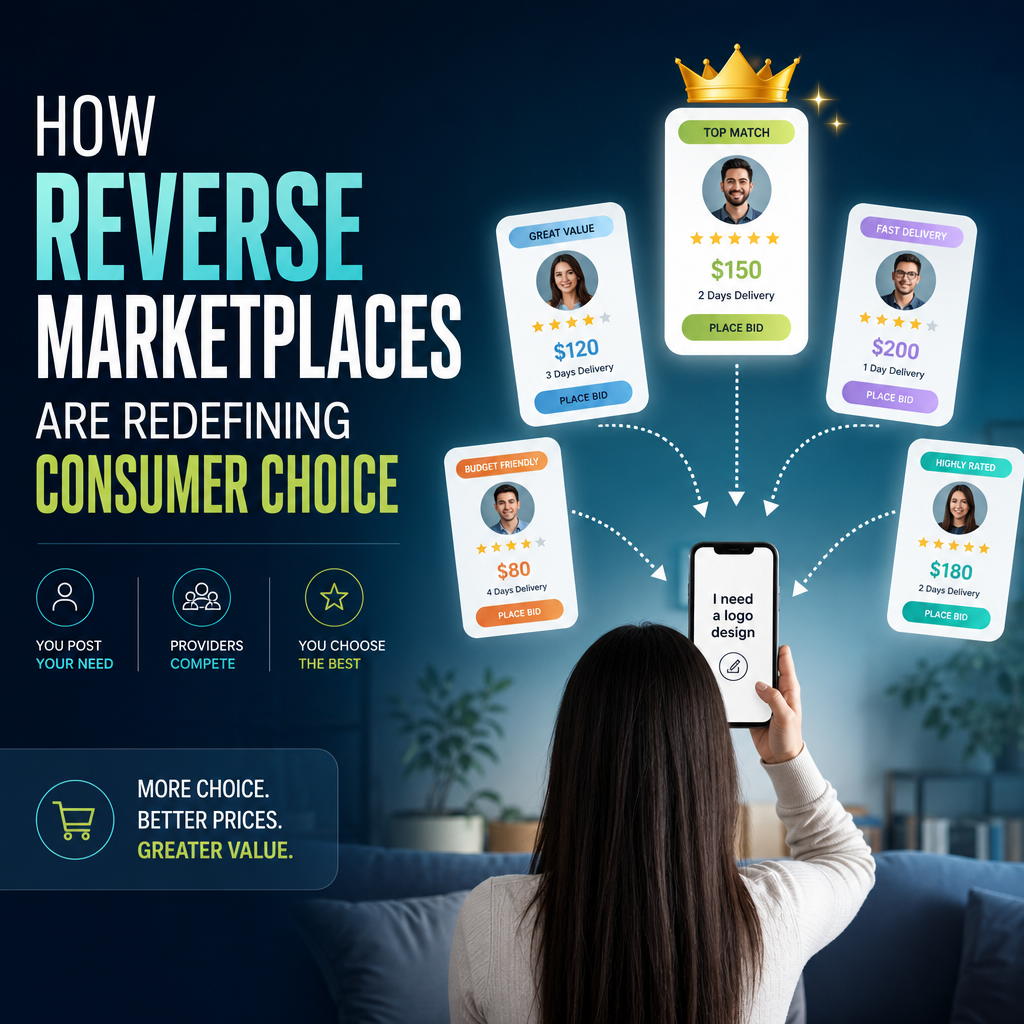
How Reverse Marketplaces Are Redefining Consumer Choice
How Reverse Marketplaces Like AutoPlace.io and OffMarketAds Are Redefining Consumer Choice
For years, online shopping has been built around a familiar model: buyers search, compare, and pick from a long list of options. That system works well in many cases, but it also creates friction. Too many choices can slow decision-making, while sellers compete for attention in crowded marketplaces.
A new model is emerging that flips the process around. Reverse marketplaces like AutoPlace.io and OffMarketAds are changing how consumers discover value by shifting the burden of searching away from the buyer and onto the marketplace itself. Instead of forcing people to dig through endless listings, these platforms help buyers access curated opportunities more efficiently.

This change is more than a convenience upgrade. It reflects a broader shift in consumer expectations around speed, relevance, and control.

What Is a Reverse Marketplace?
A reverse marketplace works differently from a traditional marketplace. In a standard marketplace, sellers list products or services and buyers browse through them. In a reverse marketplace, the buyer’s need leads the process, and the platform helps match that demand with the best available options.
This model can take several forms:

- Buyers submit a request or intent
- Sellers respond with offers
- The platform matches the buyer with the most relevant solution
- The process is often more targeted and less cluttered
Rather than scrolling through dozens of irrelevant listings, consumers are presented with options that fit their stated needs. That creates a more efficient and often more satisfying buying experience.
Why Consumers Are Responding to This Model
Consumers today are not just looking for more options. They want better options presented in a way that saves time and reduces decision fatigue.
Traditional platforms often create three common problems:
-
Information overload
Too many similar listings make it hard to compare meaningfully. -
Hidden inefficiencies
Buyers spend time filtering out poor matches before finding strong ones. -
Low personalization
Many marketplaces treat all users the same, even when their needs are very different.
Reverse marketplaces address these issues by creating a more focused buying journey. Instead of asking consumers to do all the work, platforms like AutoPlace.io and OffMarketAds help surface relevant opportunities faster.
AutoPlace.io and the Shift in Consumer Experience
AutoPlace.io is one example of how reverse marketplace thinking can transform a buying process. In categories where timing, specificity, and value matter, a more direct matching system can make a major difference.
Rather than relying on passive browsing, users can engage with a platform designed to streamline discovery. That means less time wasted and more confidence in the final decision.
The appeal is simple: consumers want a process that feels intelligent, responsive, and aligned with their needs. AutoPlace.io reflects that demand by reducing the noise and focusing attention on the right opportunities.
What This Means for Buyers
For buyers, the benefits often include:
- Faster access to relevant choices
- Less manual searching
- Better comparison of serious offers
- A more tailored experience
- Greater confidence in decision-making
This is especially valuable in markets where quality varies widely and the cost of a bad choice is high.
OffMarketAds and the Power of Hidden Value
OffMarketAds shows another side of the reverse marketplace trend. Not every great opportunity is visible in a standard public listing. In many cases, the most valuable offers are private, limited, or not actively advertised.
That creates a challenge for consumers who are trying to find the best deal. A reverse marketplace can help surface these hidden opportunities by connecting demand with off-market supply.
This approach can be powerful because it expands consumer choice beyond what is publicly displayed. It gives users access to a broader range of possibilities, including options they might never have found through traditional browsing.
Why Off-Market Access Matters
Off-market access can lead to:
- Better pricing
- Less competition for the same listing
- More exclusive opportunities
- Faster negotiations
- Improved matching between buyer intent and seller availability
In other words, consumer choice is not just about having more listings. It is about having access to the right listings.
How Reverse Marketplaces Redefine Choice
The traditional idea of choice assumes that more listings equal more freedom. But in practice, too many options can overwhelm users and make it harder to decide.
Reverse marketplaces redefine choice by making it more meaningful. Instead of offering quantity without direction, they emphasize relevance, quality, and timing. This makes the consumer feel less like a browser and more like an active participant in the buying process.
Here is how the model changes the experience:
From Searching to Matching
Consumers no longer need to do all the discovery work themselves. The platform helps match needs with solutions.
From Noise to Relevance
Rather than sifting through unrelated results, buyers see options that are more likely to fit.
From Passive Browsing to Intent-Based Action
Consumers begin with a goal, and the marketplace responds to that goal.
The Future of Consumer Choice
As digital behavior continues to evolve, the most successful marketplaces will be those that reduce friction and increase trust. Reverse marketplaces are well-positioned for that future because they align with what consumers increasingly want: less clutter, more clarity, and faster results.
Platforms like AutoPlace.io and OffMarketAds are part of a larger movement toward demand-driven commerce. They show that consumer choice does not have to mean endless scrolling. It can mean smarter access, better matching, and more control over the buying journey.
Conclusion
Reverse marketplaces are redefining consumer choice by turning the traditional marketplace model on its head. Instead of making buyers search harder, they make the buying process more intentional and efficient.
With platforms like AutoPlace.io and OffMarketAds leading the way, consumers are gaining access to more relevant opportunities, hidden value, and a better overall experience. In a crowded digital world, that kind of clarity is becoming one of the most valuable choices of all.