
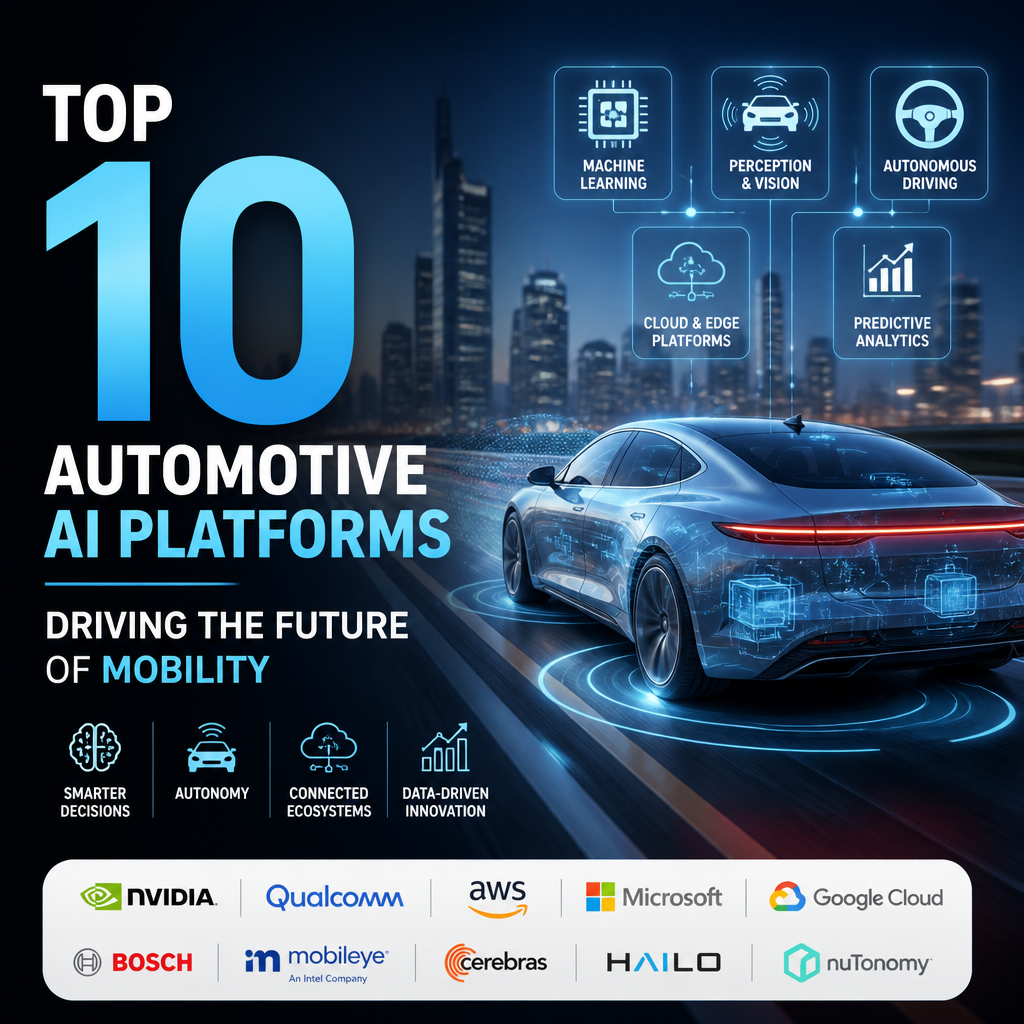
Top 10 Automotive AI Platforms Driving the Future of Mobility
Top Ten Automotive AI Platforms Driving the Future of Mobility
Artificial intelligence is reshaping the automotive industry at a remarkable pace. From safer driver assistance to autonomous navigation and smarter fleet operations, the top ten automotive AI platforms driving the future of mobility are helping automakers, suppliers, and tech companies build vehicles that think, learn, and adapt.
These platforms do more than automate simple tasks. They process massive amounts of sensor data, support real-time decision-making, and power the intelligent features that define next-generation mobility. Here’s a look at the most influential platforms leading the way.

1. NVIDIA DRIVE
NVIDIA DRIVE is one of the most recognized AI platforms in the automotive world. It combines powerful hardware and software for autonomous driving, driver assistance, and in-vehicle AI.

Its strength lies in deep learning and high-performance computing. Automakers use it to process data from cameras, radar, and lidar with exceptional speed. This makes it a favorite for advanced driver assistance systems and self-driving research.
2. Mobileye
Mobileye has become a major name in computer vision for vehicles. Its AI platform helps cars understand their surroundings through camera-based perception.

The system is widely used in driver assistance features such as lane keeping, collision warning, and adaptive cruise control. Mobileye’s mapping and sensor fusion capabilities also support autonomous driving initiatives, making it a key player in mobility innovation.
3. Tesla Autopilot and Full Self-Driving
Tesla’s AI platform is known for pushing the boundaries of vehicle intelligence. Autopilot and Full Self-Driving use neural networks, real-world driving data, and over-the-air updates to continuously improve performance.
Tesla’s approach is unique because it relies heavily on fleet data. Every mile driven helps train the system, creating a feedback loop that accelerates development. This makes Tesla one of the most influential names in automotive AI.
4. Qualcomm Snapdragon Ride
Qualcomm Snapdragon Ride is designed for scalable automotive intelligence. It powers driver assistance, cockpit systems, and autonomous capabilities through a flexible computing architecture.
The platform is especially attractive to automakers looking for integrated solutions. It supports high-performance AI workloads while helping reduce power consumption, which is essential for electric and connected vehicles.
5. AWS for Automotive
Amazon Web Services offers cloud-based tools that support everything from vehicle data analytics to digital twins and AI model training. While not a vehicle system in itself, AWS is a major platform for automotive AI development.
Manufacturers and mobility companies use AWS to manage connected car data, build machine learning pipelines, and deploy intelligent services at scale. Its cloud-first approach helps accelerate innovation across the industry.
6. Google Cloud Automotive AI
Google Cloud provides AI and data tools that help automakers build smarter mobility solutions. Its strengths include machine learning, predictive analytics, and natural language processing.
The platform is used for personalized in-car experiences, fleet optimization, and customer service automation. With its strong data infrastructure, Google Cloud plays a growing role in connected mobility ecosystems.
7. Microsoft Azure for Mobility
Microsoft Azure supports automotive AI through cloud computing, machine learning, and edge intelligence. It helps companies develop connected vehicle services, analyze telemetry data, and improve operational efficiency.
Azure is especially valuable for enterprise mobility, fleet management, and digital showroom experiences. Its ability to connect cloud and edge environments makes it a practical choice for large-scale automotive transformation.
8. Bosch AI and ADAS Platforms
Bosch has long been a trusted supplier in the automotive industry, and its AI-driven platforms are helping modernize safety and automation. The company focuses on advanced driver assistance, sensor fusion, and intelligent control systems.
Bosch’s solutions are built for reliability and mass-market deployment. That makes them important for automakers looking to bring AI features into everyday vehicles rather than only premium models.
9. Aptiv Smart Vehicle Architecture
Aptiv is helping shape the software-defined vehicle through its smart vehicle architecture and AI-enabled mobility platforms. The company focuses on centralized computing, sensor integration, and scalable electrical systems.
Its platform supports the transition from traditional car electronics to flexible, software-driven mobility. That shift is essential for autonomous functions, over-the-air updates, and future vehicle services.
10. Intel Mobileye and Edge AI Ecosystems
Intel continues to influence automotive AI through edge computing, in-vehicle processors, and strategic investments in mobility technology. Together with its ecosystem partners, Intel supports AI workloads for smart cockpits, vehicle perception, and autonomous systems.
The edge AI approach matters because vehicles need fast, local decision-making without depending entirely on cloud connectivity. Intel’s infrastructure helps make that possible.
Why These Platforms Matter
The rise of automotive AI platforms is changing how vehicles are designed, built, and operated. They are enabling:
- Safer driver assistance and automated safety features
- Smarter traffic navigation and route planning
- More efficient electric vehicle management
- Connected services and personalized in-car experiences
- Faster development of autonomous driving systems
As vehicles become more software-defined, the importance of scalable AI platforms will only increase. Automakers are no longer just building machines; they are building intelligent systems that learn from data and improve over time.
The Road Ahead
The future of mobility will depend on platforms that can handle complexity, safety, and scale. The top ten automotive AI platforms driving the future of mobility are setting the foundation for that future by combining advanced computing, machine learning, and real-world automotive expertise.
In the years ahead, expect these platforms to become even more integrated into electric vehicles, autonomous fleets, and connected transportation networks. For drivers, passengers, and businesses alike, the result will be mobility that is safer, smarter, and more responsive than ever before.