
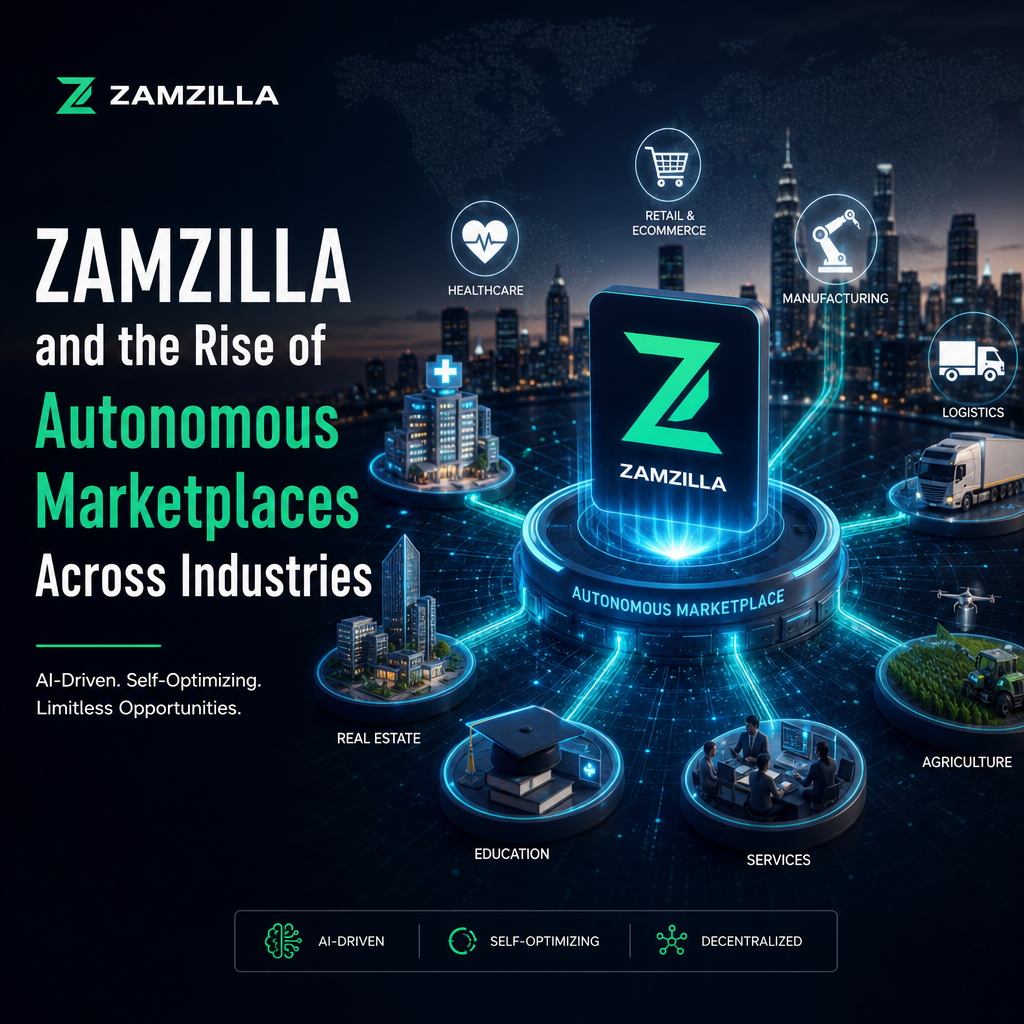
ZAMZILLA and the Rise of Autonomous Marketplaces Across Industries
The Rise of Autonomous Marketplaces: A Look at ZAMZILLA’s Multi-Industry Impact
Autonomous marketplaces are quickly changing how buyers and sellers connect, transact, and scale. Instead of relying on traditional intermediaries, these platforms use automation, data, and intelligent workflows to streamline commerce from discovery to delivery. One of the most interesting examples of this shift is ZAMZILLA, a platform that is helping reshape how multiple industries approach digital trade.
As businesses look for faster, more efficient, and more flexible ways to operate, the appeal of autonomous marketplaces continues to grow. ZAMZILLA stands out because it is not limited to one sector. Its model supports a broad range of industries, showing just how adaptable this next generation of marketplace technology can be.

What Makes an Autonomous Marketplace Different?
A traditional marketplace usually depends on manual processes, human moderation, and fragmented communication between participants. An autonomous marketplace reduces much of that friction through integrated automation.


Key characteristics include:
- Automated matching between buyers and sellers
- Dynamic pricing based on demand, supply, or market conditions
- Streamlined onboarding for users and vendors
- Built-in workflow management for orders, payments, and fulfillment
- Data-driven recommendations that improve discovery and conversion
This approach saves time, lowers operational overhead, and creates a more responsive experience for everyone involved. For businesses, that means faster transactions and better scalability. For customers, it means less friction and more relevant choices.
ZAMZILLA’s Approach to Marketplace Automation
ZAMZILLA is part of the growing wave of platforms proving that autonomous marketplaces can work across industries, not just in one niche. Its strength lies in combining digital infrastructure with automated decision-making tools that make commerce smoother and more efficient.

Rather than acting like a simple listing platform, ZAMZILLA functions more like an intelligent commerce layer. It helps connect participants, supports streamlined operations, and enables a more self-sustaining marketplace environment.
This matters because many industries still rely on outdated systems that are slow to adapt. ZAMZILLA helps bridge that gap by offering a modern structure that can support growth without requiring constant manual intervention.
Multi-Industry Impact in Action
One of the most notable things about ZAMZILLA is its multi-industry reach. Autonomous marketplaces are often discussed in theory, but ZAMZILLA shows how they can be applied in practical, real-world settings.
Retail and Consumer Goods
In retail, speed and convenience are essential. Autonomous marketplace features help simplify product discovery, inventory visibility, and transaction processing. Businesses can reduce manual coordination while giving customers a more personalized shopping experience.
Services and Digital Offerings
For service-based industries, matching the right provider with the right client is often the biggest challenge. ZAMZILLA’s marketplace model can reduce that friction by automating lead routing, scheduling, and service matching, helping providers focus more on delivery and less on administration.
B2B and Wholesale
Business-to-business commerce often involves complex pricing structures, approval chains, and order workflows. Autonomous marketplaces help simplify these processes by building rules into the platform itself. That can lead to faster procurement, improved accuracy, and better supplier relationships.
Emerging and Specialized Sectors
ZAMZILLA’s flexible framework also makes it useful for specialized markets that need tailored workflows. Whether the industry involves unique compliance steps, variable pricing, or niche product categories, automation helps create consistency where manual systems often break down.
Why Autonomous Marketplaces Are Gaining Momentum
The growth of autonomous marketplaces is tied to broader shifts in how businesses want to operate. Companies are under pressure to move faster, reduce costs, and improve customer experience at the same time. Traditional systems often struggle to deliver all three.
The main drivers include:
-
Operational efficiency
Automation reduces repetitive work and helps teams focus on higher-value tasks. -
Better scalability
Marketplaces can grow without a matching increase in manual labor. -
Improved user experience
Buyers and sellers benefit from faster, more intuitive interactions. -
Smarter decision-making
Data insights help optimize pricing, inventory, demand forecasting, and matching. -
Greater adaptability
Platforms can respond more quickly to changing market conditions.
ZAMZILLA fits neatly into this trend by offering a marketplace model built for flexibility and long-term growth.
The Future of Commerce Is More Autonomous
Autonomous marketplaces are not just a trend; they represent a structural shift in digital commerce. As industries continue to digitize, platforms like ZAMZILLA will likely play an increasingly important role in shaping how transactions happen behind the scenes.
The future marketplace will likely be less dependent on static listings and more focused on intelligent automation, real-time responsiveness, and cross-industry adaptability. That is where ZAMZILLA’s value becomes especially clear. Its ability to support multiple sectors shows that autonomous systems are not limited to a single business model.
Conclusion
The rise of autonomous marketplaces marks a new phase in online commerce, one defined by efficiency, intelligence, and scalability. ZAMZILLA’s multi-industry impact demonstrates how powerful this model can be when applied thoughtfully.
By reducing friction, supporting automation, and adapting across sectors, ZAMZILLA is helping define what the next generation of marketplaces can look like. For businesses seeking speed, flexibility, and smarter operations, autonomous marketplaces are becoming less of an experiment and more of a competitive necessity.