
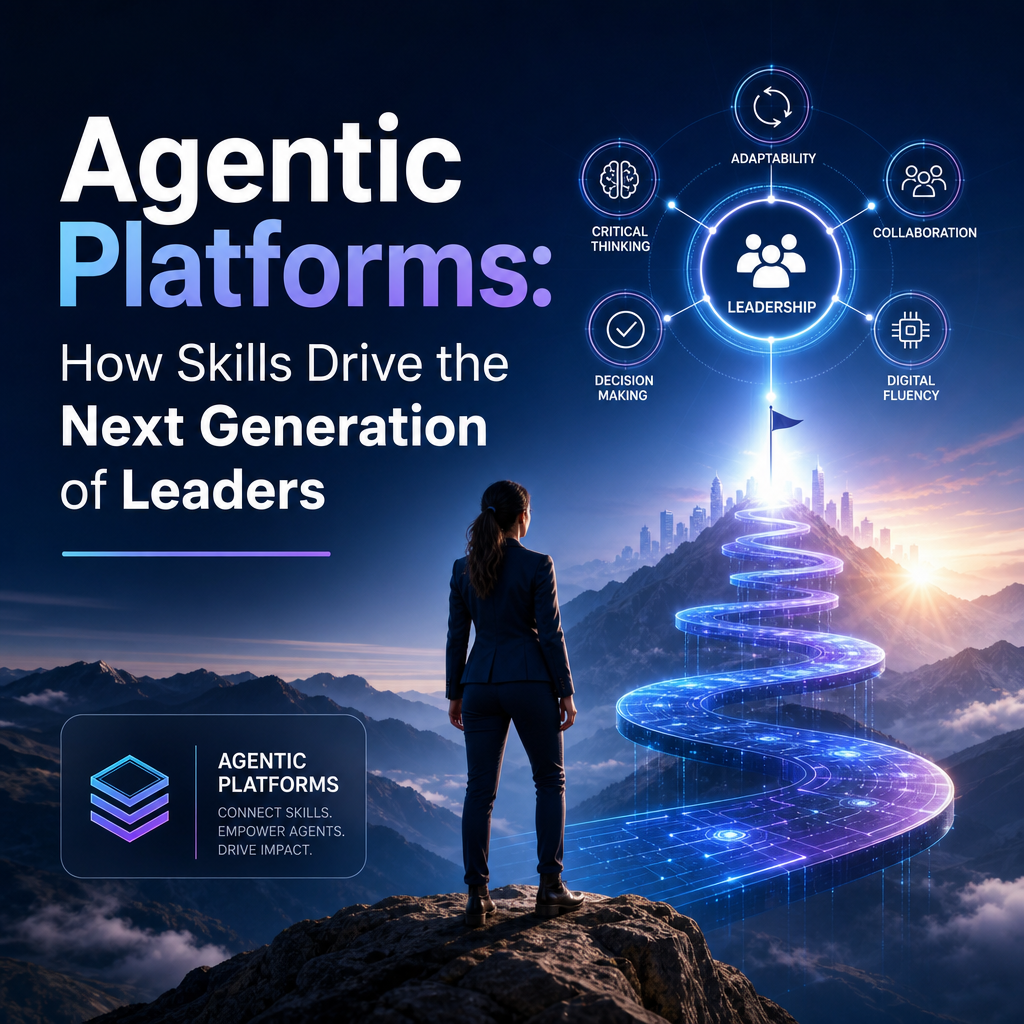
Agentic Platforms: How Skills Drive the Next Generation of Leaders
From Skills to Success: How Agentic Platforms Empower the Next Generation of Leaders
The path from individual skill to lasting success has changed. Today’s leaders are expected to think strategically, move quickly, and adapt constantly. They must manage complexity, make better decisions, and guide teams through uncertainty. That is where agentic platforms are making a difference.
These systems are more than tools. They act as intelligent partners that can analyze information, suggest next steps, and even take action with minimal supervision. For emerging leaders, this means a new kind of support system—one that helps turn raw skills into real-world impact.

What Makes Leadership Different Today?
Leadership used to be defined by experience, authority, and strong communication. Those qualities still matter, but the modern environment demands more.


Leaders now face:
- Rapid technological change
- Distributed teams
- Overloaded information
- Faster decision cycles
- Higher expectations for personalization and results
To succeed, future leaders need more than knowledge. They need the ability to apply knowledge quickly and consistently. This is where agentic platforms create an advantage.

What Are Agentic Platforms?
Agentic platforms are intelligent systems designed to act with purpose. Instead of simply waiting for commands, they can assess context, identify patterns, and carry out tasks based on goals.
In practical terms, they can help with:
- Prioritizing work
- Summarizing complex data
- Automating repetitive tasks
- Recommending actions based on goals
- Supporting communication and collaboration
Unlike traditional software, agentic platforms are proactive. They do not just store information or display dashboards. They help users move forward.
Why They Matter for Emerging Leaders
The next generation of leaders often enters the workforce with strong technical skills but limited experience in managing larger responsibilities. Agentic platforms help bridge that gap.
1. They build decision-making confidence
Good leaders make decisions under pressure. Agentic platforms can present relevant insights quickly, reducing guesswork and helping users evaluate options more clearly.
Instead of spending hours gathering data, a leader can focus on understanding the best path forward.
2. They improve productivity without burnout
Many high-potential professionals struggle with too many manual tasks. Scheduling, reporting, follow-ups, and coordination can drain time and energy.
By automating routine work, agentic platforms free leaders to focus on the more valuable parts of their roles:
- Strategy
- Coaching
- Innovation
- Relationship building
This shift can reduce stress while increasing impact.
3. They accelerate learning through action
Leadership development is not just about reading or attending training sessions. It is about practice.
Agentic platforms help users learn in real time by guiding them through tasks, offering feedback, and adapting to their behavior. This creates a faster learning loop and helps future leaders develop stronger instincts.
4. They support better collaboration
Modern leaders rarely work alone. They coordinate across departments, time zones, and cultures. Agentic platforms can help manage communication, keep projects on track, and make it easier to align teams around shared goals.
When collaboration is smoother, leaders can spend more time building trust and less time putting out fires.
Skills That Grow with Agentic Support
Agentic platforms do not replace leadership skills. They strengthen them. In fact, they can help emerging leaders improve several essential capabilities.
Strategic thinking
By surfacing patterns and options, these platforms encourage more thoughtful planning. Leaders can see the bigger picture and anticipate outcomes more effectively.
Communication
Agentic tools can help draft messages, tailor updates, and maintain consistency across channels. This gives leaders more time to focus on clarity, empathy, and influence.
Adaptability
Because agentic platforms respond to changing conditions, they encourage a more flexible mindset. Leaders learn to adjust quickly and stay effective even when circumstances shift.
Accountability
When tasks and goals are tracked intelligently, it becomes easier to follow through. This builds stronger habits around ownership and results.
Preparing the Next Generation for Success
For organizations, investing in agentic platforms is not just about efficiency. It is about leadership development.
When young professionals use intelligent systems from the start, they gain a better understanding of how to:
- Set priorities
- Work with data
- Lead with confidence
- Manage complexity
- Make informed decisions
This prepares them for higher responsibility faster. It also creates a culture where leadership is less about hierarchy and more about capability.
The most successful future leaders will not be the ones who do everything manually. They will be the ones who know how to combine human judgment with intelligent support.
The Future Belongs to Leaders Who Can Partner with Technology
The rise of agentic platforms marks an important shift in how leadership is developed and practiced. These systems help transform skills into success by giving emerging leaders the tools to act faster, think more clearly, and focus on what matters most.
Leadership has always required vision, discipline, and resilience. Now it also requires the ability to work alongside intelligent systems. Those who embrace that partnership will be best positioned to lead the next generation forward.
In a world that rewards speed, adaptability, and insight, agentic platforms are becoming a powerful ally for anyone ready to grow from capable professional to effective leader.