
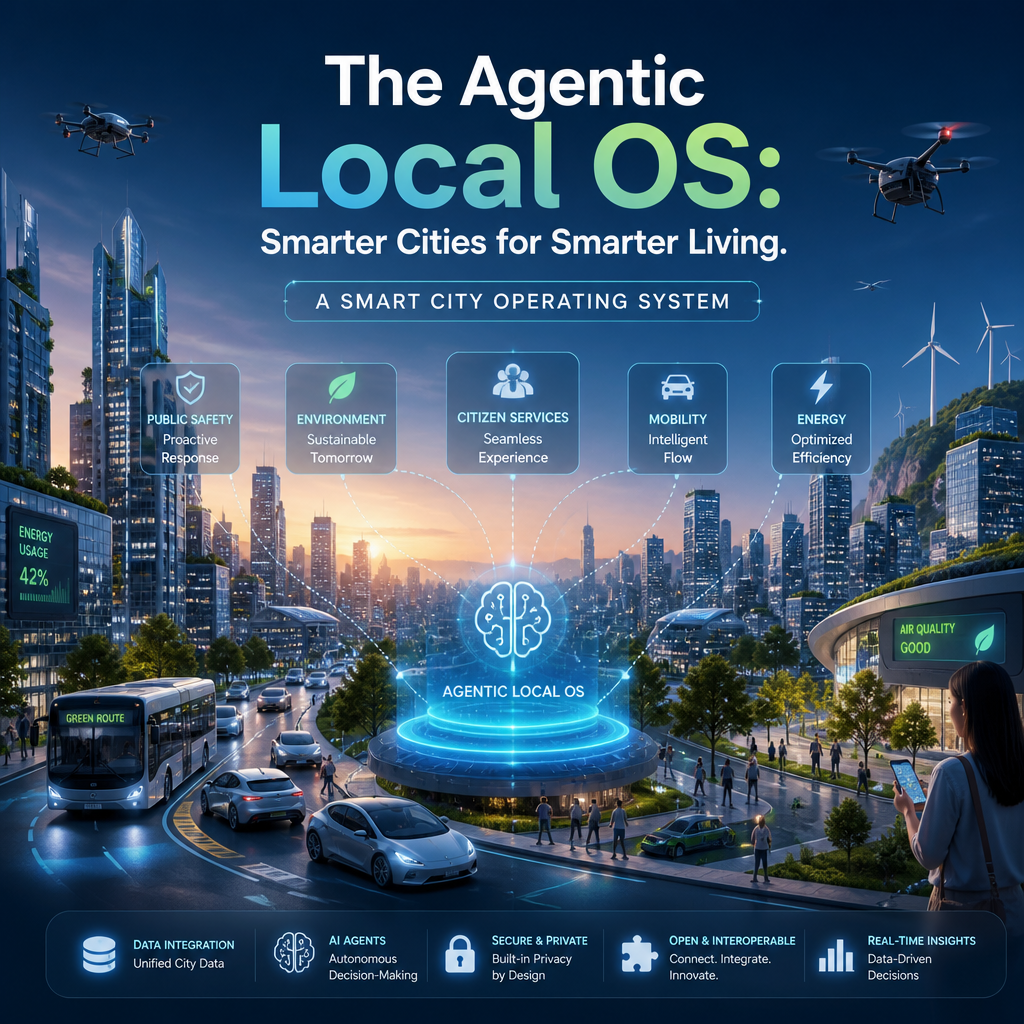
The Agentic Local OS: Smarter Cities for Smarter Living
The Agentic Local OS: Smarter Cities, Smarter Living
Cities are getting more complex, and the pressure on local infrastructure keeps growing. Traffic, energy use, water management, waste collection, public safety, and citizen services all need to work together more efficiently. That is where The Agentic Local OS: Smarter Cities, Smarter Living comes in.
This idea represents a new kind of city operating layer—one that does not just collect data, but acts on it intelligently. Instead of isolated systems and slow manual decision-making, an agentic local OS can coordinate services, predict needs, and respond in real time. The result is a city that feels more connected, more responsive, and easier to live in.

What Is an Agentic Local OS?
An agentic local OS is a coordinated digital framework for managing local environments such as neighborhoods, districts, campuses, or entire cities. The word agentic refers to the system’s ability to take initiative.

Rather than waiting for someone to manually review dashboards and issue commands, the system can:
- detect changes in real time
- prioritize local issues
- automate routine responses
- coordinate multiple services at once
- learn from past patterns
In simple terms, it acts like a smart city brain with local intelligence. It can help a city respond faster and make better decisions using live data from sensors, apps, vehicles, utilities, and public systems.

Why Cities Need Smarter Coordination
Modern cities often rely on separate tools for transportation, utilities, security, and resident communication. These systems may work well on their own, but they rarely talk to each other effectively.
That creates common problems:
- traffic systems do not adapt quickly enough to congestion
- energy grids struggle with uneven demand
- maintenance issues are reported too late
- public services are disconnected from real-time citizen needs
- local planners lack a single view of what is happening
An agentic local OS reduces this fragmentation. It brings together data streams and turns them into coordinated action. If a street is crowded, transit signals, parking guidance, and pedestrian alerts can all respond together. If a neighborhood experiences a power spike, the energy system can rebalance loads before outages occur.
Smarter Living at the Neighborhood Level
The biggest benefit of The Agentic Local OS: Smarter Cities, Smarter Living is that it improves everyday life in visible ways. It is not only about large-scale urban planning. It is about making daily routines easier, safer, and more efficient.
Better Mobility
Transportation is one of the clearest use cases. An agentic system can:
- adjust traffic signals based on live congestion
- optimize bus or shuttle routes
- improve parking availability updates
- coordinate bike lanes and pedestrian crossings
This means less time spent waiting in traffic and more reliable movement across the city.
More Efficient Energy Use
Local OS platforms can support smarter energy management by tracking demand patterns and adjusting resources dynamically. They can help buildings reduce waste, identify peak usage, and integrate renewable energy more effectively.
This not only saves money but also supports sustainability goals.
Faster Maintenance and Repairs
Broken lights, blocked drains, damaged roads, and faulty equipment can be detected earlier when systems monitor conditions continuously. The local OS can alert maintenance teams automatically and even prioritize repairs based on impact.
That leads to cleaner streets, safer public areas, and fewer disruptions.
Improved Citizen Services
Residents benefit when city services are easier to access and more responsive. An agentic local OS can support:
- faster complaint handling
- personalized alerts
- digital service requests
- real-time updates during emergencies or outages
Instead of navigating multiple departments, people can interact with a more unified local experience.
The Role of Data and AI
At the heart of this model is data. Sensors, cameras, meters, mobile devices, and public platforms all generate signals about how a city is functioning. Artificial intelligence helps interpret these signals and identify patterns humans might miss.
But the true value comes from action, not just analysis.
An agentic system can make recommendations, automate low-risk decisions, and escalate more complex issues to human operators. This balance is important. Cities still need human oversight, public accountability, and ethical governance. AI should support local leaders, not replace them.
Challenges to Solve
As promising as this approach is, it comes with real challenges.
Privacy and Trust
Citizens need confidence that their data is being used responsibly. Clear policies, secure systems, and transparent governance are essential.
Interoperability
Cities often use legacy systems that were never designed to work together. Building a true local OS requires strong integration across platforms and vendors.
Equity
Smarter systems must benefit everyone, not just high-income districts or well-connected neighborhoods. Fair access should be part of the design from the start.
Human Oversight
Automation should not remove human judgment from public life. Local authorities must remain accountable for decisions that affect safety, rights, and community well-being.
The Future of Urban Life
The long-term promise of an agentic local OS is simple: cities that adapt more quickly to the people living in them. Instead of forcing residents to work around outdated systems, the city itself becomes more flexible, aware, and supportive.
That shift could redefine what urban living feels like. Streets become easier to navigate. Services become more reliable. Resources are used more wisely. Communities become safer and more connected.
A New Operating Model for Cities
The Agentic Local OS: Smarter Cities, Smarter Living is more than a technology trend. It is a new model for how local environments can function in a digital age. By combining real-time data, AI-driven coordination, and human oversight, cities can become more efficient and more livable at the same time.
The future of smart cities will not be built only on sensors and software. It will be built on systems that can think locally, act responsibly, and improve daily life in meaningful ways.