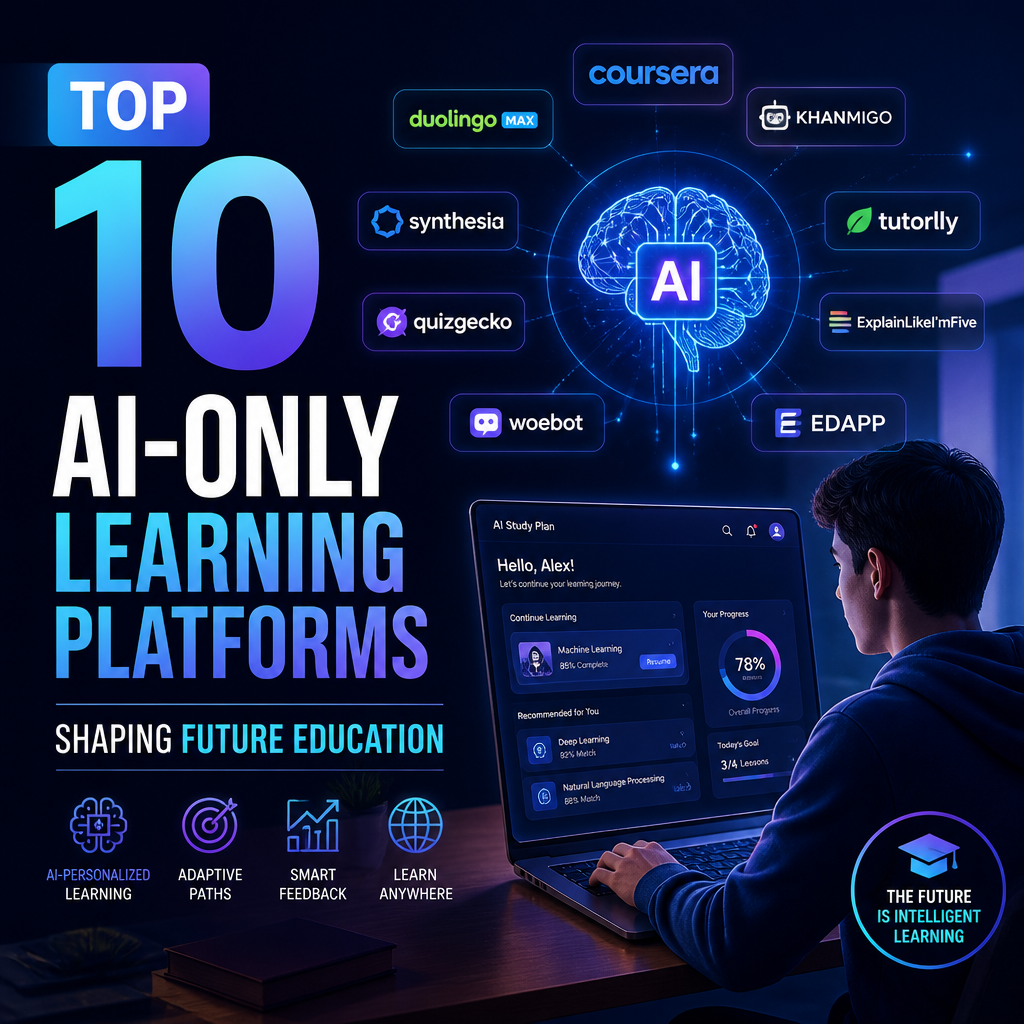
Top 10 AI-Only Learning Platforms Shaping Future Education
Top Ten AI-Only Learning Platforms Shaping the Next Generation
AI-only learning platforms are changing how people study, practice, and build skills. Instead of following one-size-fits-all lessons, these platforms use artificial intelligence to personalize content, track progress, and adapt in real time. For students, professionals, and lifelong learners, that means faster feedback, more flexible learning, and a more engaging experience.
As education becomes more digital, the best AI-only learning platforms are moving beyond simple video lessons. They are creating complete learning ecosystems that can assess strengths, identify gaps, and recommend the next best step. Here are ten types of platforms shaping the next generation of learning.

1. Personalized tutoring platforms
The most powerful AI-only learning platforms act like personal tutors. They observe how a learner answers questions, how long they take, and where mistakes happen. Then they adjust the difficulty level and teaching style automatically.

This creates a learning path that feels custom-made. A student who struggles with algebra might get more practice problems, while another student who understands the basics quickly moves ahead.
2. Language learning platforms
AI has transformed language learning by making practice more interactive. These platforms can correct pronunciation, suggest vocabulary, and build conversation exercises around a learner’s level.

Many also use chat-based practice, allowing learners to simulate real-world conversations anytime. This makes language study less intimidating and far more practical.
3. Skill-based career platforms
Career-focused learning platforms use AI to help people build job-ready skills. They often recommend lessons based on industry trends, career goals, and a learner’s current experience.
For example, someone aiming for a data analyst role may receive a path covering spreadsheets, statistics, visualization, and basic coding. This makes career learning more direct and efficient.
4. Exam preparation platforms
AI-only platforms for test prep are becoming especially popular because they can identify weak areas quickly. Instead of reviewing an entire subject equally, they focus on the topics most likely to improve a learner’s score.
These systems often include:
- Adaptive quizzes
- Timed mock exams
- Instant feedback
- Performance analytics
That level of precision helps students study smarter, not just harder.
5. Creative learning platforms
Not all learning is about math or science. Some AI-only learning platforms focus on writing, design, music, and storytelling. These tools help users brainstorm ideas, receive instant feedback, and improve their creative output.
A writing learner might get suggestions on structure and clarity. A design learner may receive guidance on layout, color balance, or composition. Creativity becomes easier to practice when support is available on demand.
6. Coding and programming platforms
AI-driven coding platforms are especially useful for beginners. They can explain errors, suggest fixes, and even generate practice tasks based on the learner’s skill level.
This makes programming more approachable. Instead of getting stuck on syntax mistakes for hours, learners can move forward with guided support and clearer explanations.
7. Microlearning platforms
Microlearning platforms break content into short, focused lessons. AI helps these platforms decide what a learner should see next and when to review past material.
This format works well for busy learners who only have a few minutes at a time. It also improves retention by spacing out lessons in a way that matches how people naturally remember information.
8. Corporate training platforms
Businesses are using AI-only learning platforms to train employees faster and more effectively. These systems can tailor onboarding, suggest role-specific modules, and track employee performance over time.
Instead of forcing every worker through the same training, companies can provide personalized development. That saves time and improves engagement.
9. Special education support platforms
One of the most important uses of AI in education is accessibility. AI-only learning platforms can support learners with different abilities by adjusting pacing, simplifying language, or offering multimodal instruction.
For some students, this might mean text-to-speech. For others, it may mean visual prompts, speech recognition, or adaptive lesson formats. The goal is to make learning more inclusive for everyone.
10. Lifelong learning platforms
The final category includes platforms designed for curious learners of all ages. These systems help people explore new subjects, keep up with technology, and stay competitive in a changing world.
Because the content is AI-adaptive, learners can start as beginners and continue advancing without needing to switch platforms. That makes lifelong learning feel smoother and more sustainable.
Why these platforms matter
The rise of AI-only learning platforms is not just a tech trend. It reflects a bigger shift in how people learn. Learners want flexibility, personalization, and support that matches their pace.
These platforms deliver on that promise by making education more responsive and less rigid. They help users stay motivated, improve faster, and build confidence along the way.
The future of learning is adaptive
As artificial intelligence continues to improve, AI-only learning platforms will become even more capable. Expect smarter recommendations, better feedback, and deeper personalization across every subject area.
The next generation of learning will not be built around fixed lessons alone. It will be built around adaptive systems that learn with the learner. That is what makes these platforms so influential today.