
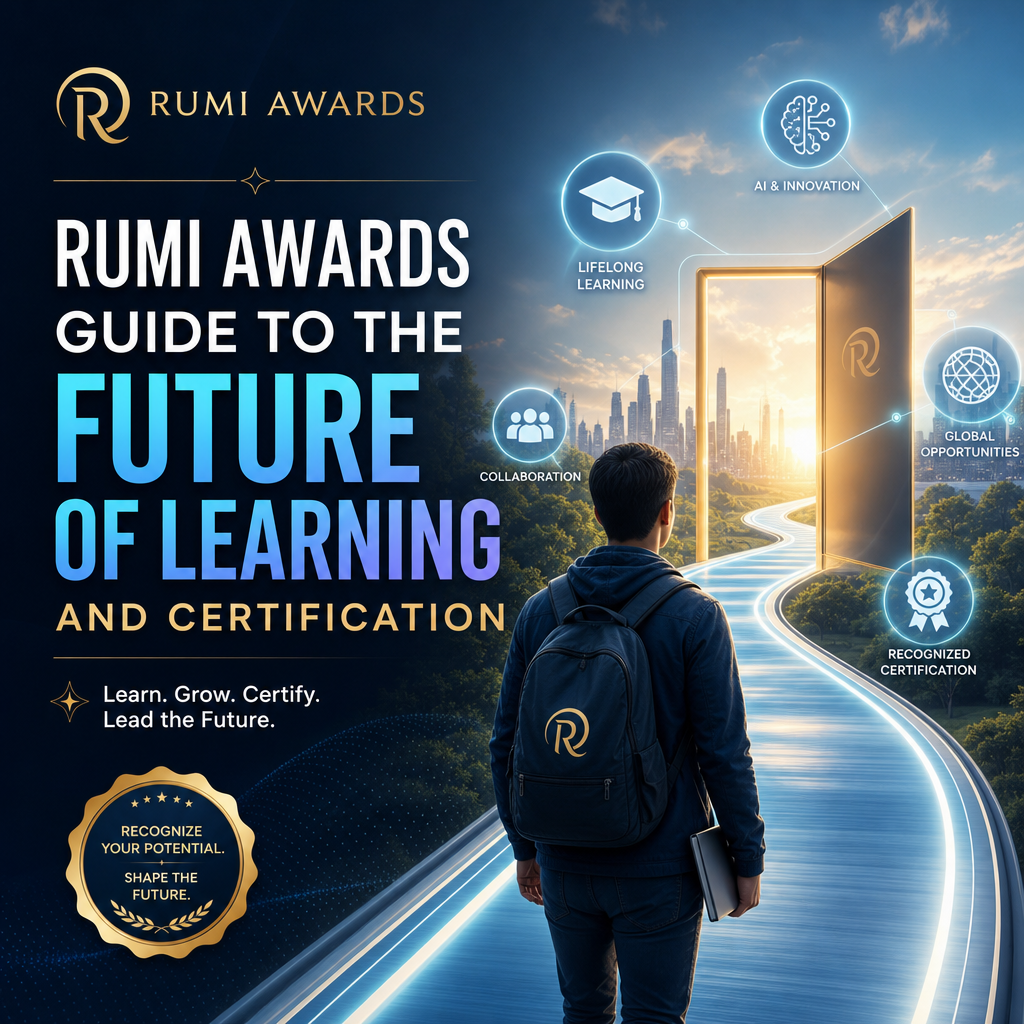
Rumi Awards Guide to the Future of Learning and Certification
The Rumi Awards Guide to the Future of Learning and Certification
Learning is changing faster than ever. Classrooms, training programs, and professional development paths are no longer limited to one place, one format, or one timeline. Today, people want education that is flexible, practical, and relevant to real-world growth. That shift is also changing how we think about recognition.
The Rumi Awards Guide to the Future of Learning and Certification explores how modern learning is becoming more personalized, more digital, and more meaningful. It also highlights why certification must evolve to reflect real skills, not just attendance or memorization.

Why the Future of Learning Looks Different
For years, education followed a familiar pattern: complete a course, pass an exam, earn a certificate. That model still matters, but it is no longer enough on its own.

Modern learners want more than a document they can file away. They want credentials that show what they can actually do. Employers, institutions, and communities are also asking for stronger evidence of capability.
Several major trends are shaping this future:

- Online and hybrid learning
- Microlearning and short-form courses
- Skills-based assessment
- Personalized learning paths
- Digital credentials and verified badges
These changes are helping learners build knowledge in smaller, more practical steps. At the same time, they are giving organizations better ways to recognize achievement.
Certification Is Moving Beyond Tradition
Traditional certification has usually focused on completion. If someone attended the program and passed the test, they received the credential. While this system still works in many cases, it can miss the bigger picture.
The future of certification is more dynamic. It is shifting toward proof of skill, demonstrated performance, and continuous learning. This matters because careers and industries now evolve too quickly for a one-time credential to remain useful forever.
What modern certification should include
A strong certification program today often includes:
-
Clear learning outcomes
Learners should know exactly what they are expected to gain. -
Practical assessment
Real tasks and applied work show whether the knowledge can be used. -
Digital verification
Certificates should be easy to verify and share online. -
Ongoing relevance
Credentials should reflect current standards and industry needs. -
Pathways for advancement
Learners should be able to build one certification into the next stage of growth.
This approach makes certification more meaningful for both learners and employers.
The Role of Technology in Learning
Technology is one of the biggest drivers of change in education. It has made learning more accessible, more flexible, and more scalable. People can now learn from anywhere, at any time, and often at their own pace.
Artificial intelligence, learning platforms, and digital assessment tools are making education smarter. They help track progress, recommend content, and personalize the experience for each learner.
Benefits of technology-driven learning
- Learners can study on their own schedule
- Organizations can train more people efficiently
- Progress can be measured more accurately
- Digital records make achievement easier to manage
- Learning can be updated quickly as industries change
This does not mean human teachers, mentors, or program leaders become less important. In fact, technology works best when it supports expert guidance rather than replacing it.
Why Recognition Matters More Than Ever
In a crowded learning landscape, recognition is a powerful motivator. People want their effort to count. They want proof that their time and commitment have led to something real.
That is why awards and certifications are becoming more connected. Recognition is no longer just about honoring excellence at the end of a journey. It is also about encouraging progress along the way.
The Rumi Awards Guide to the Future of Learning and Certification emphasizes that meaningful recognition can:
- Inspire continued learning
- Validate new skills
- Build confidence
- Improve career opportunities
- Strengthen trust between learners and institutions
When recognition is thoughtfully designed, it becomes part of the learning process itself.
A More Human Approach to Learning
Even as education becomes more digital, the most successful systems remain human-centered. People learn best when they feel supported, respected, and understood. That means future learning models should focus not only on technology and efficiency, but also on purpose and connection.
A human-centered approach includes:
Flexibility
Learners have different goals, schedules, and responsibilities. Good systems adapt to those realities.
Relevance
Coursework and certification should connect to real skills, real challenges, and real outcomes.
Inclusion
Learning should be accessible to a wide range of people, regardless of background or location.
Growth
Recognition should encourage learners to keep moving forward, not stop after one milestone.
This kind of approach creates stronger long-term value for everyone involved.
Looking Ahead
The future of learning and certification is about more than digital tools or new formats. It is about building systems that reflect how people actually grow. Learning is becoming continuous. Certification is becoming more flexible. Recognition is becoming more meaningful.
That is the promise behind the Rumi Awards Guide to the Future of Learning and Certification: a future where achievement is measured not only by completion, but by capability, progress, and impact.
As education continues to evolve, the organizations that succeed will be those that embrace change while staying focused on quality, trust, and human potential. The learners who thrive will be the ones who keep adapting, keep building, and keep proving what they can do.
In the end, the future of learning is not just about earning credentials. It is about creating opportunities, recognizing talent, and helping people turn knowledge into action.