
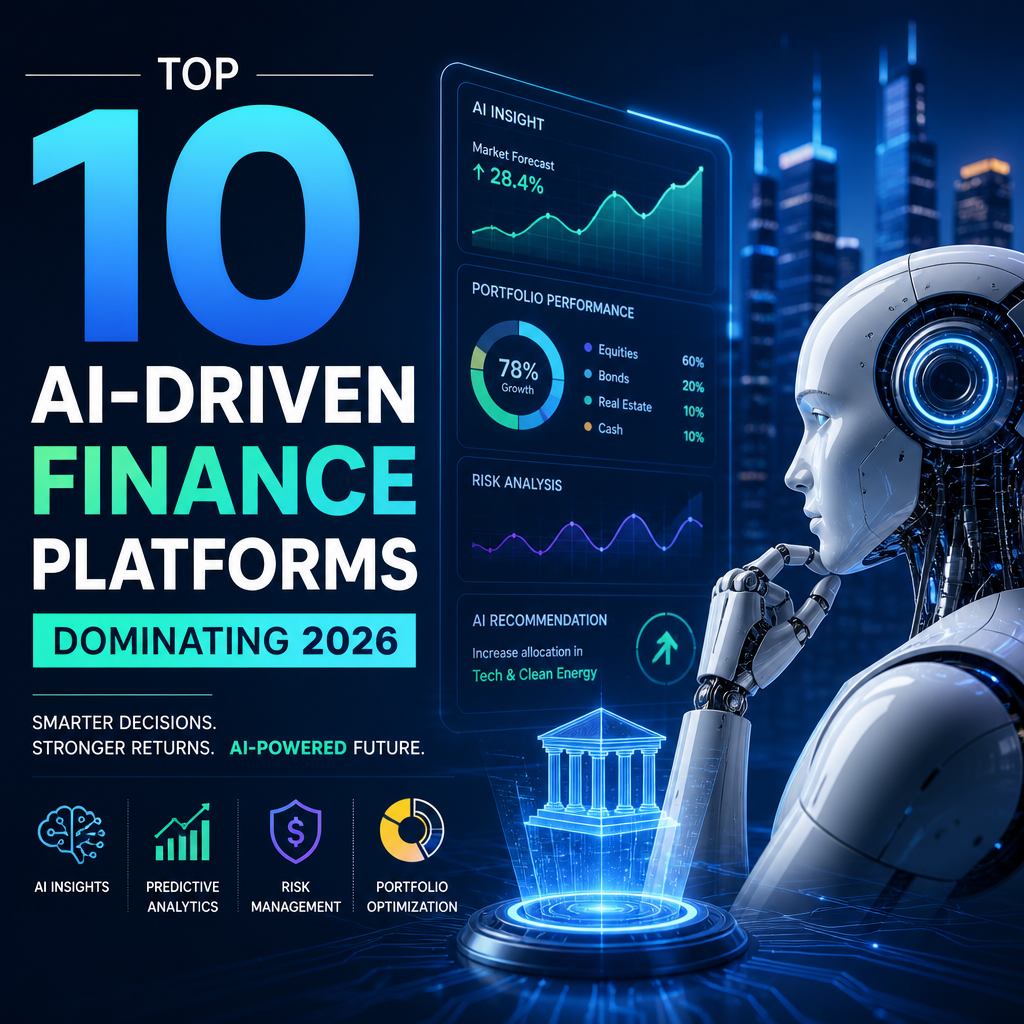
Top 10 AI-Driven Finance Platforms Dominating 2026
Top Ten AI-Driven Finance Platforms Dominating 2026
AI is reshaping finance faster than almost any other industry. By 2026, the most successful finance tools are no longer just digital ledgers or mobile banking apps. They are intelligent platforms that predict cash flow, automate decisions, detect fraud in real time, and give users personalized financial guidance at scale.
The top ten AI-driven finance platforms dominating 2026 are expected to stand out for one simple reason: they make money management faster, smarter, and more proactive. Whether you are an individual investor, a startup founder, or a large enterprise finance team, these platforms are changing how financial decisions get made.

Why AI Is Transforming Finance
Traditional finance software was built to record what happened. AI-driven platforms are built to predict what will happen next.

That shift matters because finance depends on timing, accuracy, and insight. AI can:
- Spot spending patterns before they become problems
- Flag suspicious transactions instantly
- Forecast revenue and expenses more accurately
- Suggest better investment or savings decisions
- Reduce manual reporting and reconciliation work
As a result, finance teams and consumers are moving toward tools that do more than store data. They want platforms that interpret it.

The Top Ten AI-Driven Finance Platforms in 2026
1. Intuit TurboTax and QuickBooks AI
Intuit continues to lead by embedding AI into tax filing, bookkeeping, and small business finance. Its platforms now offer smarter categorization, forecast-based cash flow insights, and automated tax recommendations.
2. Xero AI Finance Suite
Xero has become a favorite among small and mid-sized businesses because of its intuitive automation. In 2026, its AI features are expected to improve expense coding, invoice processing, and financial reporting with minimal human effort.
3. Sage Intacct Intelligence
Sage Intacct is known for enterprise accounting, and its AI layer is a major reason it remains competitive. Finance teams use it for anomaly detection, smarter revenue recognition, and faster month-end close processes.
4. NetSuite AI Cloud ERP
Oracle NetSuite combines ERP, accounting, and analytics in one system. Its AI-driven forecasting and automated workflows make it especially strong for scaling companies that need finance and operations to work together.
5. Plaid Insights
Plaid is not a consumer finance app in the traditional sense, but its data infrastructure powers many of them. Its AI capabilities help fintech apps analyze spending behavior, assess risk, and connect financial accounts more securely.
6. Bloomberg Terminal AI
For institutional investors, Bloomberg Terminal remains essential. In 2026, AI-assisted market analysis, natural language search, and predictive signals make it even more valuable for traders and portfolio managers.
7. Koyfin Intelligence Platform
Koyfin has gained traction with investors who want powerful analytics without the steep learning curve of legacy terminals. Its AI-enhanced dashboards help users identify trends, compare assets, and monitor macroeconomic shifts quickly.
8. Ramp
Ramp has become one of the most influential AI-driven spend management platforms. It automates expense tracking, vendor management, and policy enforcement while offering real-time insights that help businesses control costs.
9. Brex AI Finance Tools
Brex continues to expand beyond corporate cards into a full finance platform for startups and modern businesses. Its AI features help teams manage spend, optimize budgets, and streamline approvals.
10. Wealthfront and Betterment AI Advisors
Robo-advisors remain a major force in personal finance, and platforms like Wealthfront and Betterment keep evolving. Their AI-powered portfolio tools help users automate investing, rebalance risk, and align financial goals with market conditions.
What Makes These Platforms Stand Out
The platforms leading 2026 are not just using AI as a buzzword. They are solving real finance problems with practical tools.
Key strengths include:
- Automation: Repetitive tasks like categorization, reconciliation, and reporting are handled automatically
- Prediction: AI forecasts spending, revenue, and market behavior
- Personalization: Recommendations adapt to each user’s goals and habits
- Security: Fraud detection and anomaly alerts improve protection
- Speed: Financial decisions happen faster with less manual review
These features save time, reduce errors, and create better financial outcomes.
What to Expect Next
The next phase of AI in finance will likely bring even deeper integration. Platforms will become more conversational, more predictive, and more autonomous. Instead of asking users to find insights, they will surface them automatically.
We can also expect stronger regulation, better transparency, and increased demand for explainable AI. Finance is too important to be left to black-box decision-making. The most trusted platforms will be those that combine intelligence with accountability.
Final Thoughts
The top ten AI-driven finance platforms dominating 2026 reflect a bigger shift in how money is managed. From accounting and payroll to investment analysis and spend control, AI is now the engine behind the most effective finance tools.
For businesses, that means less time on manual work and more time on strategy. For individuals, it means better visibility into spending, saving, and investing. In both cases, the future of finance is not just digital. It is intelligent.