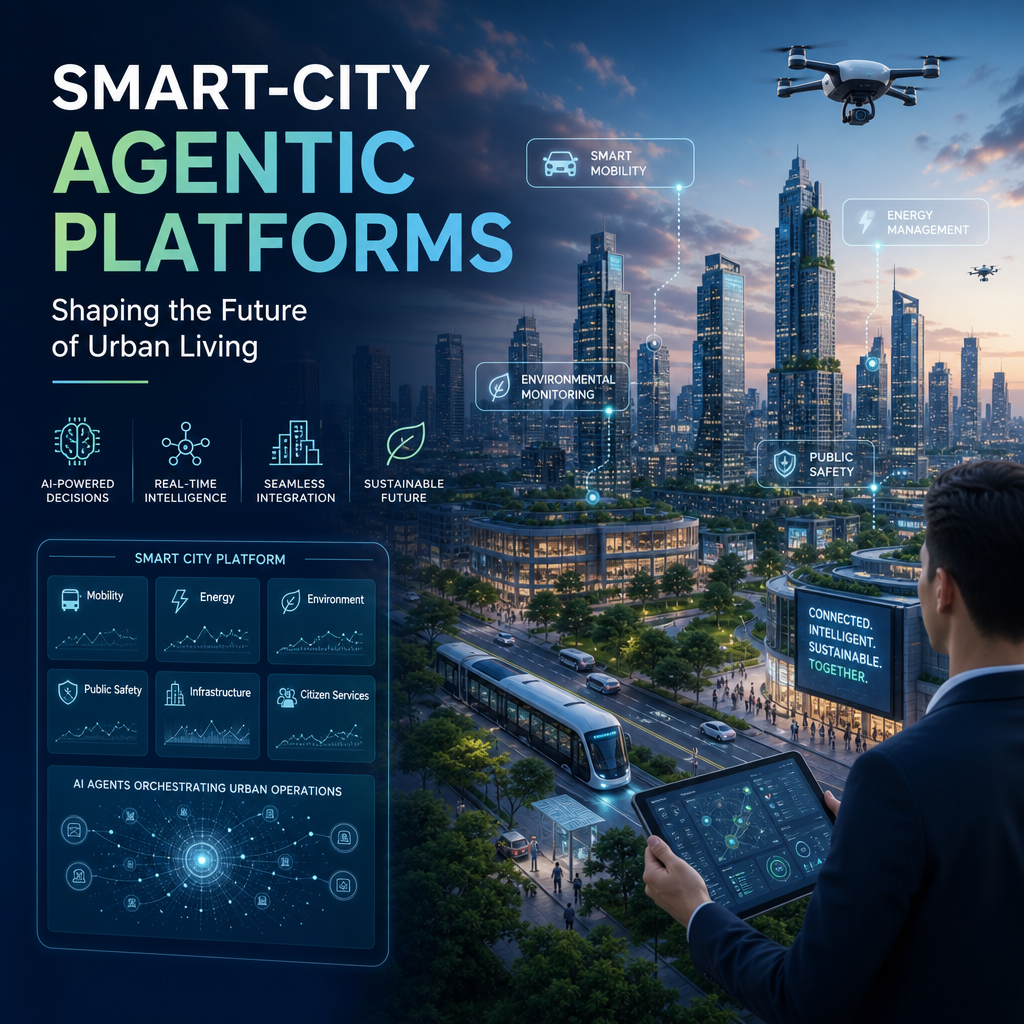
Smart-City Agentic Platforms: Shaping the Future of Urban Living
How Smart-City Agentic Platforms Are Shaping the Future of Urban Living
Cities are getting smarter, but the next big shift is not just about sensors, dashboards, or connected devices. It is about smart-city agentic platforms—systems that can sense, decide, and act across complex urban environments with far less manual intervention. These platforms are changing how cities manage traffic, energy, public safety, waste, and citizen services.
Instead of simply collecting data, agentic platforms use that data to make coordinated decisions in real time. That means cities can respond faster, operate more efficiently, and deliver a better quality of life for residents.

What Are Smart-City Agentic Platforms?
A smart-city agentic platform is an intelligent digital layer that connects city infrastructure, data sources, and automation tools. Unlike traditional software that only reports what is happening, these platforms can take action based on changing conditions.

For example, a platform might:
- Adjust traffic signal timing when congestion builds
- Reroute public transit based on road closures
- Detect a water leak and alert maintenance teams automatically
- Balance energy demand across neighborhoods during peak hours
The “agentic” part refers to the system’s ability to act with purpose. It does not just wait for a human operator to tell it what to do. It can evaluate options, choose the best response, and execute tasks within defined rules and safeguards.

Why Cities Need Smarter Coordination
Urban life is increasingly complex. Population growth, aging infrastructure, climate pressures, and rising service demands make city management harder every year. Traditional systems often work in silos, which creates delays and inefficiencies.
A transportation department may have traffic data that the emergency services team never sees. The energy grid may be under stress while building systems operate independently. Public works teams may only learn about problems after residents file complaints.
Smart-city agentic platforms help connect these disconnected systems. By using a shared intelligence layer, city leaders can coordinate actions across departments and make decisions based on a complete picture of what is happening in the city.
This coordination can lead to:
- Faster emergency response
- Lower operational costs
- Reduced emissions
- Better use of public resources
- More responsive citizen services
Real-World Applications in Urban Living
The impact of smart-city agentic platforms is already visible in several key areas.
Traffic and Mobility
Traffic is one of the most obvious pain points in urban life. Agentic platforms can monitor vehicle flow, weather, transit usage, and accident reports to optimize movement across a city.
Instead of fixed traffic patterns, signals can adapt in real time. Public buses may receive priority at intersections. Parking systems can guide drivers to available spaces, reducing congestion caused by circling vehicles.
Energy Management
Cities consume huge amounts of energy, and much of it is wasted through inefficiency. Agentic platforms can help balance electricity demand, manage street lighting, and support renewable energy integration.
For instance, a city could dim streetlights in low-traffic areas while keeping them bright where needed for safety. Buildings connected to the system could shift energy usage away from peak demand periods, lowering costs for both the city and residents.
Public Safety
Public safety systems benefit from faster detection and response. Smart-city agentic platforms can analyze video feeds, sensor alerts, weather data, and incident reports to identify risks sooner.
During severe storms, the platform might trigger flood warnings, notify response teams, and redirect traffic away from dangerous roads. In high-traffic areas, it could help coordinate crowd movement and support emergency planning.
Waste and Environmental Services
Waste collection can also become more efficient. Sensors in bins can signal when they are near capacity, allowing collection routes to be adjusted dynamically. This reduces unnecessary fuel use and helps prevent overflow.
The same idea applies to air quality monitoring, water management, and noise control. By continuously tracking environmental conditions, cities can respond more effectively to issues that affect daily life.
Benefits for Residents
The promise of smart-city agentic platforms is not just better government operations. It is a better everyday experience for people living in the city.
Residents may notice:
- Shorter commute times
- More reliable utilities
- Cleaner streets and public spaces
- Faster response to service issues
- Safer neighborhoods and public areas
In many cases, the biggest benefit is convenience. When services work smoothly in the background, people spend less time dealing with disruptions and more time enjoying their city.
Challenges Cities Must Address
Despite their promise, these platforms are not without challenges. Cities must ensure that automation is transparent, secure, and fair.
Important concerns include:
Data Privacy
Smart-city systems often rely on large amounts of data from cameras, devices, and citizen interactions. Cities must protect personal information and clearly explain how data is used.
Cybersecurity
Because these platforms connect critical infrastructure, they must be protected from cyberattacks. A failure in one system could affect transportation, utilities, or emergency services.
Bias and Accountability
If an automated system makes poor decisions, someone must be accountable. Cities need governance frameworks that define who oversees the platform and how decisions are reviewed.
Public Trust
Residents are more likely to support smart-city initiatives when they understand the benefits and feel confident that the system is being used responsibly.
The Future of Urban Living
The future of cities will likely be shaped by systems that are not only smart, but also adaptive and proactive. Smart-city agentic platforms represent a move from reactive management to intelligent coordination.
As these platforms mature, they could help cities become more resilient, sustainable, and livable. Streets may flow more smoothly, energy may be used more efficiently, and public services may become more responsive to real-time needs.
Urban living has always depended on good planning. Now, with agentic technology, cities can plan, adapt, and act with a level of speed and precision that was once impossible. That makes smart-city agentic platforms one of the most important forces shaping the cities of tomorrow.