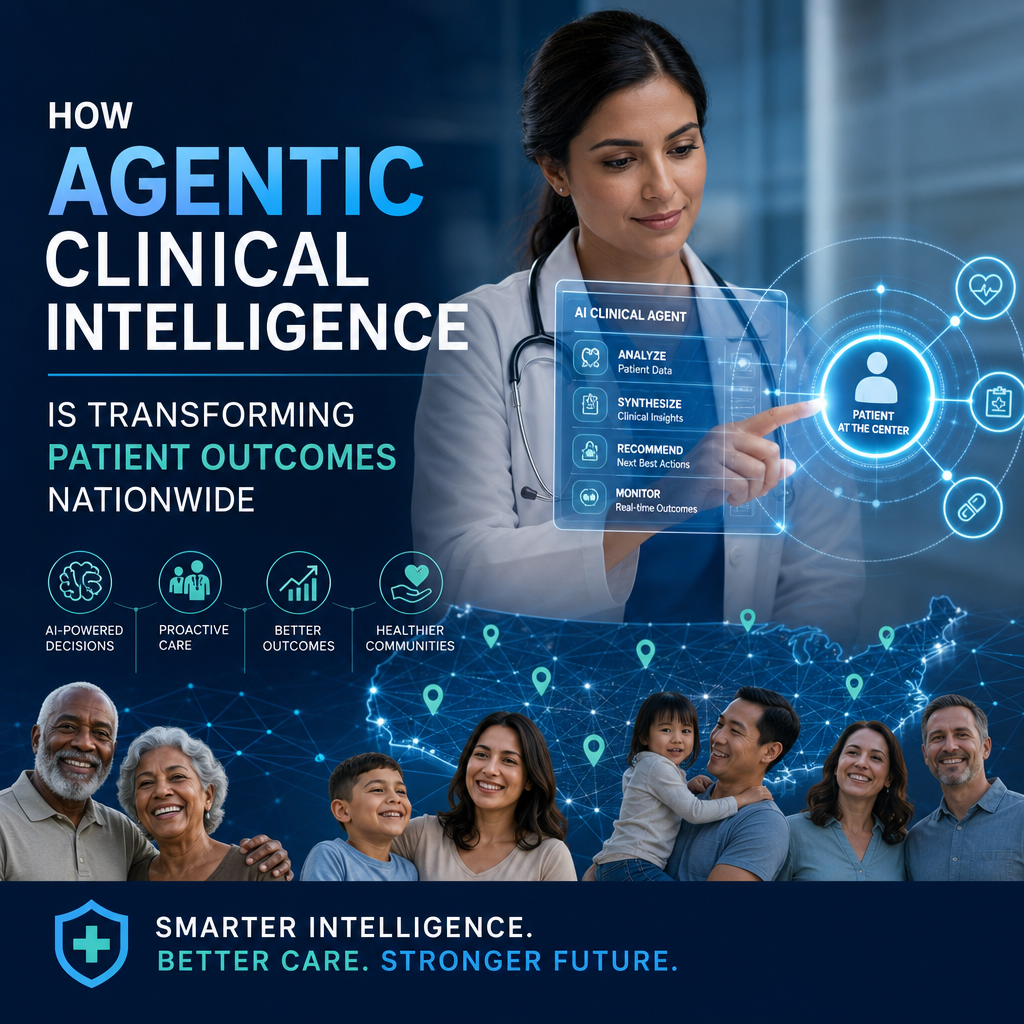
How Agentic Clinical Intelligence Is Transforming Patient Outcomes Nationwide
How Agentic Clinical Intelligence Is Transforming Patient Outcomes Nationwide
Healthcare systems across the country are under constant pressure to do more with less. Clinicians are managing rising patient volumes, complex chronic conditions, staffing shortages, and growing administrative demands all at once. In this environment, agentic clinical intelligence is emerging as a powerful force for change.
Unlike traditional analytics tools that simply surface data, agentic clinical intelligence can interpret information, identify patterns, recommend next steps, and help coordinate action across care teams. The result is faster decisions, more personalized care, and better outcomes for patients nationwide.

What Agentic Clinical Intelligence Means
At its core, agentic clinical intelligence combines artificial intelligence, clinical data, and workflow automation to support real-world healthcare decisions. The word agentic matters because these systems do more than observe. They act with purpose, helping clinicians move from insight to intervention.

Instead of requiring staff to search through fragmented records, agentic systems can:
- Detect changes in patient status early
- Flag risks before they become emergencies
- Suggest evidence-based care pathways
- Prioritize outreach for high-risk patients
- Reduce repetitive administrative tasks
This makes the technology especially valuable in settings where time and attention are limited.

Improving Early Detection and Intervention
One of the most important benefits of agentic clinical intelligence is its ability to identify risk sooner. Many poor outcomes begin with subtle warning signs that are easy to miss in busy clinical environments. A slight change in lab trends, medication adherence, or follow-up timing can signal a larger issue.
By continuously analyzing patient data, agentic systems can alert care teams when a patient may be heading toward:
- Hospital readmission
- Disease progression
- Medication complications
- Gaps in preventive care
- Missed follow-up appointments
Earlier intervention often means simpler treatment, fewer complications, and better long-term health. For patients with chronic conditions like diabetes, heart failure, or COPD, this can make a meaningful difference.
Supporting Clinicians, Not Replacing Them
A common concern about AI in healthcare is whether it will replace human judgment. In practice, the most effective systems are designed to support clinicians, not override them. Agentic clinical intelligence works best when it enhances expertise rather than tries to substitute for it.
Clinicians still make the final decisions. What changes is the quality and speed of the information they receive. Instead of spending valuable time pulling data from different systems, they can focus on patient care.
This support can help reduce burnout by easing some of the pressure associated with:
- Chart review
- Risk stratification
- Care coordination
- Documentation tasks
- Referral management
When clinicians have more time for direct patient interaction, care becomes more personal and more effective.
Closing Gaps in Care Across Communities
Patient outcomes are not shaped by clinical decisions alone. Access, transportation, language barriers, social determinants of health, and inconsistent follow-up all influence whether patients receive the care they need. Agentic clinical intelligence can help identify these gaps and guide more targeted outreach.
For example, a system might recognize that a patient has not filled a prescription, missed an appointment, or lacks a recent screening. It can then help care managers prioritize outreach based on urgency and risk.
This kind of targeted support is especially useful in large health systems, community clinics, and value-based care programs. It helps ensure that vulnerable patients are not lost in the cracks.
Driving More Personalized Care
Nationwide, healthcare is moving away from one-size-fits-all treatment toward more personalized care models. Agentic clinical intelligence supports that shift by bringing together a fuller picture of each patient’s history, behavior, and needs.
Instead of relying only on isolated data points, clinicians can see patterns across:
- Diagnoses
- Medications
- Lab results
- Past utilization
- Follow-up behavior
- Social and environmental factors
With this broader view, care plans can be adjusted more precisely. That may mean changing medication timing, scheduling more frequent monitoring, or connecting a patient with support resources earlier in the process.
Real-World Impact on Health Systems
Health systems that adopt agentic clinical intelligence often see improvements in both clinical and operational performance. While results vary by organization, the most common benefits include:
- Fewer avoidable readmissions
- Better chronic disease management
- Faster response to high-risk patients
- Improved coordination between care teams
- More efficient use of staff time
These gains matter because they improve the patient experience while also helping organizations operate more sustainably.
The Future of Patient Outcomes
The future of healthcare will depend on systems that can adapt quickly, act intelligently, and support clinicians in real time. Agentic clinical intelligence is helping make that future possible. By turning data into action, it enables earlier interventions, more coordinated care, and stronger outcomes across diverse patient populations.
As adoption grows nationwide, the real promise of this technology is not just smarter systems. It is healthier patients, better care experiences, and a more resilient healthcare workforce.
In a field where every delay can matter, agentic clinical intelligence is becoming an essential tool for transforming patient outcomes nationwide.