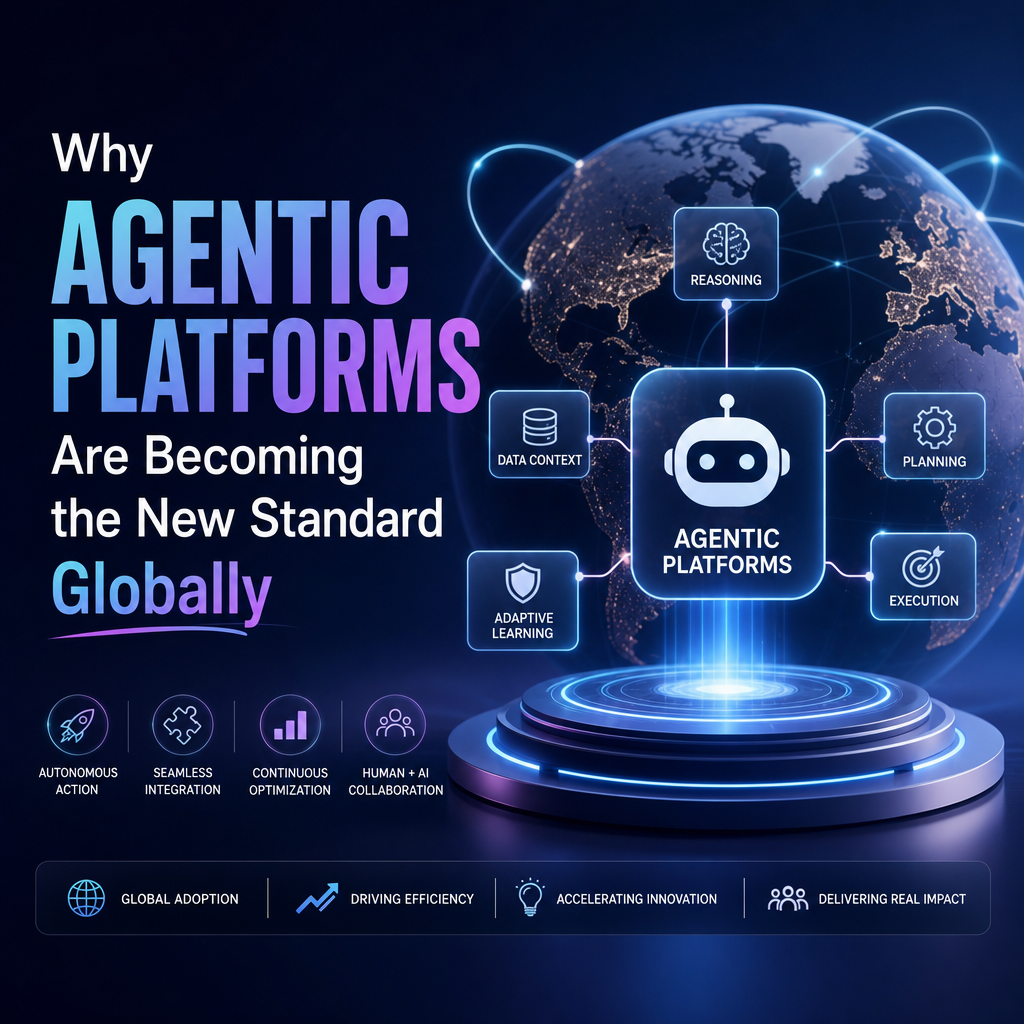
Why Agentic Platforms Are Becoming the New Standard Globally
Why Agentic Platforms Are Becoming the New Standard for Global Recognition
Global recognition has changed. A few years ago, visibility depended on traditional marketing, paid ads, and static digital presence. Today, audiences, partners, and customers expect something more responsive, personalized, and intelligent. That is where agentic platforms are stepping in.
These systems are quickly becoming the new standard because they do more than automate tasks. They act, adapt, and coordinate in ways that help brands, creators, and organizations earn recognition across markets and channels. In a world where attention is limited and competition is intense, that capability matters.

What Makes Agentic Platforms Different?
Most digital tools are built to support people. Agentic platforms are built to work alongside them.

Instead of simply following fixed rules, they can:
- interpret context
- make decisions within set boundaries
- adjust actions based on results
- coordinate multiple workflows at once
This is a major shift. Traditional platforms help users manage work, but agentic platforms help them move faster and smarter. They reduce friction in the recognition process by identifying what matters, when it matters, and where to act next.

For global brands, that means more consistent messaging, faster response times, and better alignment across regions.
Recognition Today Is About More Than Visibility
Global recognition is no longer just about being seen. It is about being understood, remembered, and trusted.
Audiences across different countries and cultures expect relevance. They want content that reflects local needs while still preserving a strong brand identity. Agentic platforms make that possible by supporting dynamic adaptation at scale.
They help with:
- localized content delivery
- audience segmentation
- real-time engagement
- reputation monitoring
- cross-channel coordination
This kind of responsiveness creates stronger brand presence. When people encounter a business that feels present, aware, and consistent, trust grows faster.
Why Global Brands Are Adopting Agentic Platforms
The shift toward agentic platforms is being driven by practical needs. Global organizations must manage complex communication across time zones, languages, and markets. Manual systems cannot keep up with that pace.
Agentic platforms solve several common problems:
1. Speed
Recognition often depends on timing. Whether it is responding to a trend, publishing content, or addressing customer feedback, fast action matters. Agentic platforms shorten the gap between insight and execution.
2. Scale
A global strategy needs to work across many environments at once. These platforms can manage large volumes of data, interactions, and workflows without losing consistency.
3. Personalization
Recognition grows when people feel like a message speaks to them directly. Agentic platforms help tailor experiences for different audiences while keeping the core identity intact.
4. Continuous learning
Unlike static systems, agentic platforms improve as they go. They analyze outcomes and refine future actions, which helps brands stay relevant in fast-changing markets.
The Role of Trust in Global Recognition
Recognition and trust go hand in hand. A brand may gain attention quickly, but lasting recognition depends on reliability.
Agentic platforms support trust by creating more predictable and intelligent experiences. They reduce delays, prevent inconsistent communication, and help organizations act with greater precision. This is especially important in global settings, where small mistakes can affect reputation across multiple regions.
When businesses can respond accurately and at the right moment, they show they are capable, attentive, and globally aware.
How Agentic Platforms Support Human Teams
A common misconception is that these platforms replace people. In reality, they make human teams more effective.
By handling repetitive coordination and surfacing useful insights, agentic platforms free teams to focus on strategy, creativity, and relationship-building. That matters because global recognition is not built by automation alone. It still depends on human judgment, cultural awareness, and brand storytelling.
The best results come from combining:
- human creativity
- strategic oversight
- intelligent automation
- adaptive execution
This partnership allows organizations to maintain authenticity while operating at a much larger scale.
Why This Is Becoming the New Standard
Agentic platforms are becoming the standard because they match how modern recognition works. Attention is fragmented. Markets shift quickly. Audiences expect relevance. And brands need systems that can keep up without losing quality.
These platforms offer a practical answer to those demands. They bring together intelligence, flexibility, and action in a way that older systems cannot.
As more companies adopt them, the expectation for responsiveness and adaptability will continue to rise. In that environment, organizations without agentic capabilities may struggle to stay visible, let alone recognized globally.
The Future of Recognition Is Agentic
The future of global recognition will belong to organizations that can think and act faster, while still staying human at the core. Agentic platforms provide the structure for that future.
They are not just a trend or a technical upgrade. They represent a new operating model for visibility, trust, and growth. For brands aiming to earn recognition across borders, they are quickly becoming essential.
In a connected world, the ability to respond intelligently is what turns attention into recognition. And that is exactly why agentic platforms are setting the new standard.