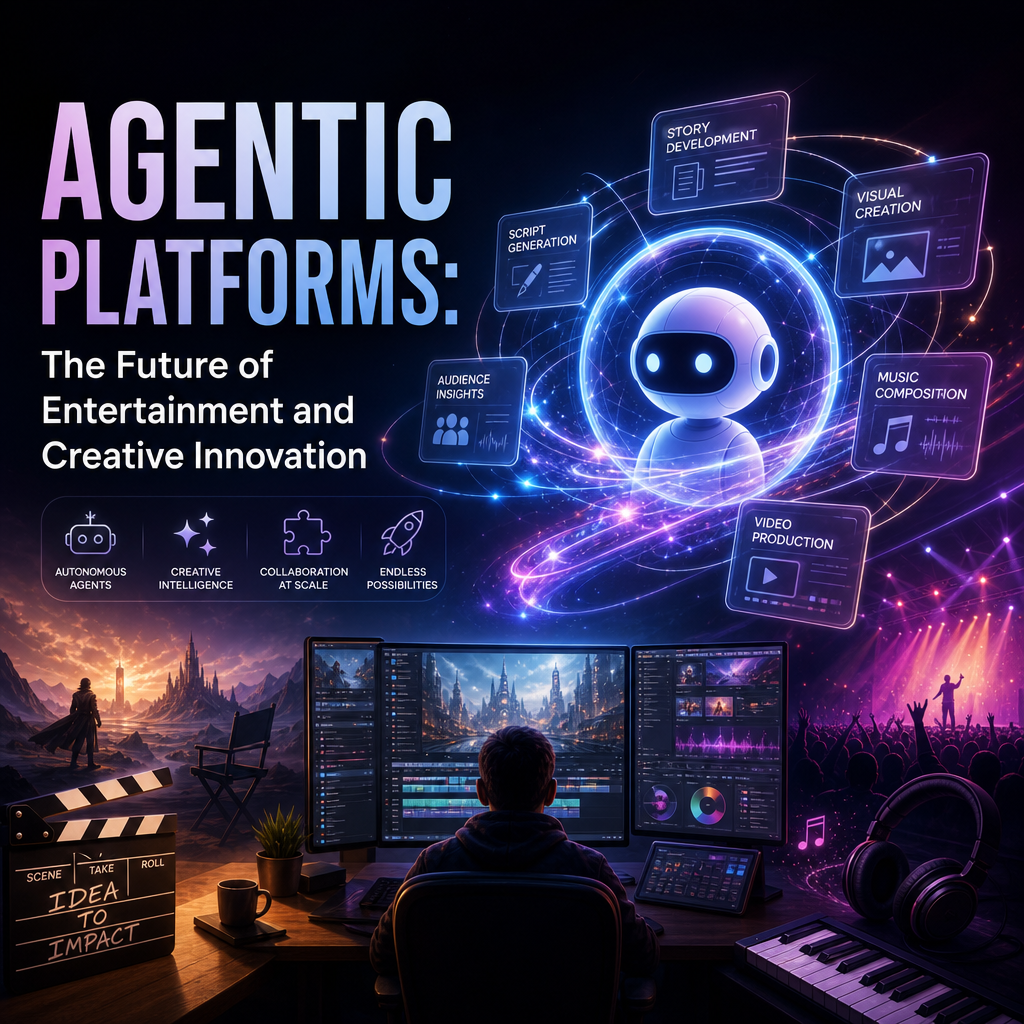
Agentic Platforms: The Future of Entertainment and Creative Innovation
The Future of Entertainment: Agentic Platforms Leading the Next Creative Wave
Entertainment has always evolved alongside technology. From radio to streaming, from VHS to on-demand video, each leap has changed how stories are made, shared, and experienced. Now a new shift is emerging: agentic platforms. These systems do more than generate content or automate tasks. They can plan, adapt, collaborate, and act with a level of independence that opens the door to a new creative era.
As the entertainment industry looks ahead, the rise of agentic platforms may become one of the most important changes yet. They are not just tools for creators. They are becoming active participants in the creative process.

What Are Agentic Platforms?
Agentic platforms are AI-powered systems designed to take initiative. Unlike basic software that waits for direct instructions, these platforms can make decisions based on goals, context, and feedback. In entertainment, that means they can help create, organize, personalize, and distribute content in smarter ways.

A simple example is a platform that can:
- analyze audience preferences
- suggest story directions
- help edit scenes or scripts
- generate marketing assets
- adjust recommendations in real time
This kind of intelligence makes the creative workflow faster and more flexible. It also allows teams to experiment at a scale that was once impossible.

How Agentic Platforms Are Changing Content Creation
The future of entertainment is not about replacing human creativity. It is about extending it. Agentic platforms can remove repetitive work and support creators at every stage of production.
Faster idea development
Writers, producers, and designers often spend a lot of time brainstorming early concepts. Agentic platforms can help by generating outlines, testing variations, and identifying what may resonate with target audiences. This does not eliminate the creative spark. Instead, it gives creators more material to shape and refine.
Smarter production workflows
Film, television, music, and gaming all depend on complex coordination. Agentic platforms can assist with scheduling, asset management, and version control. They can even flag possible production bottlenecks before they become serious problems. For teams working on tight deadlines, that kind of support is invaluable.
More dynamic personalization
Audiences increasingly expect entertainment tailored to their tastes. Streaming platforms already recommend content based on viewing history, but agentic systems can take this further. They may soon help customize trailers, interactive narratives, game experiences, and even promotional campaigns based on user behavior and preferences.
Interactive Entertainment Is Getting More Intelligent
One of the most exciting possibilities for agentic platforms is the rise of truly adaptive entertainment. Imagine a game that changes its storyline based not only on player choices, but also on pacing, skill level, and emotional engagement. Or a streaming experience that can shift in tone or format depending on viewer interest.
This is where entertainment begins to feel less like a static product and more like a living experience.
Examples of what this could look like
- Interactive films that adjust scene order or depth based on viewer input
- Games with smarter non-player characters that respond more naturally
- Live events with AI-driven backstage support and audience engagement tools
- Music platforms that generate personalized mixes or evolving soundscapes
These experiences create a stronger sense of connection. They also blur the line between creator and audience, making entertainment more immersive than ever before.
The Creative Opportunity for Human Artists
There is understandable concern that AI may dilute originality. But agentic platforms can also help artists push boundaries. By handling repetitive tasks, they free up time for higher-level thinking, experimentation, and emotional storytelling.
Human creators bring something AI cannot fully replicate: lived experience, cultural nuance, and intention. Agentic platforms work best when they amplify those strengths rather than compete with them.
In practice, this could mean:
- writers using AI to test alternative plot structures
- musicians using intelligent tools to explore new sounds
- directors using automated analysis to improve pacing or audience flow
- designers using agentic systems to prototype faster
When used thoughtfully, these platforms become collaborators in the creative process.
Challenges That Still Need Attention
The rise of agentic platforms also brings important challenges. Entertainment companies will need to address issues around transparency, intellectual property, and bias. If an AI system contributes to a script, score, or visual design, who owns the result? If a platform favors certain audience patterns, does it narrow creative diversity?
There is also the question of trust. Audiences want innovation, but they also value authenticity. The entertainment industry will need clear standards for when and how AI is used.
Key areas to watch include:
- content ownership and licensing
- ethical use of audience data
- preservation of human authorship
- safeguards against repetitive or formulaic output
These issues will shape how widely agentic platforms are adopted.
A New Creative Wave Is Beginning
The future of entertainment will likely be defined by collaboration between human imagination and intelligent systems. Agentic platforms are leading this change by making content creation more adaptive, personalized, and efficient. They are helping entertainment become more responsive to both creators and audiences.
This next creative wave will not be built on technology alone. It will be shaped by the choices artists, studios, and platforms make about how to use these tools. The most successful entertainment of the future will probably be the kind that combines emotional depth with intelligent support.
In other words, the future is not just automated. It is agentic.