
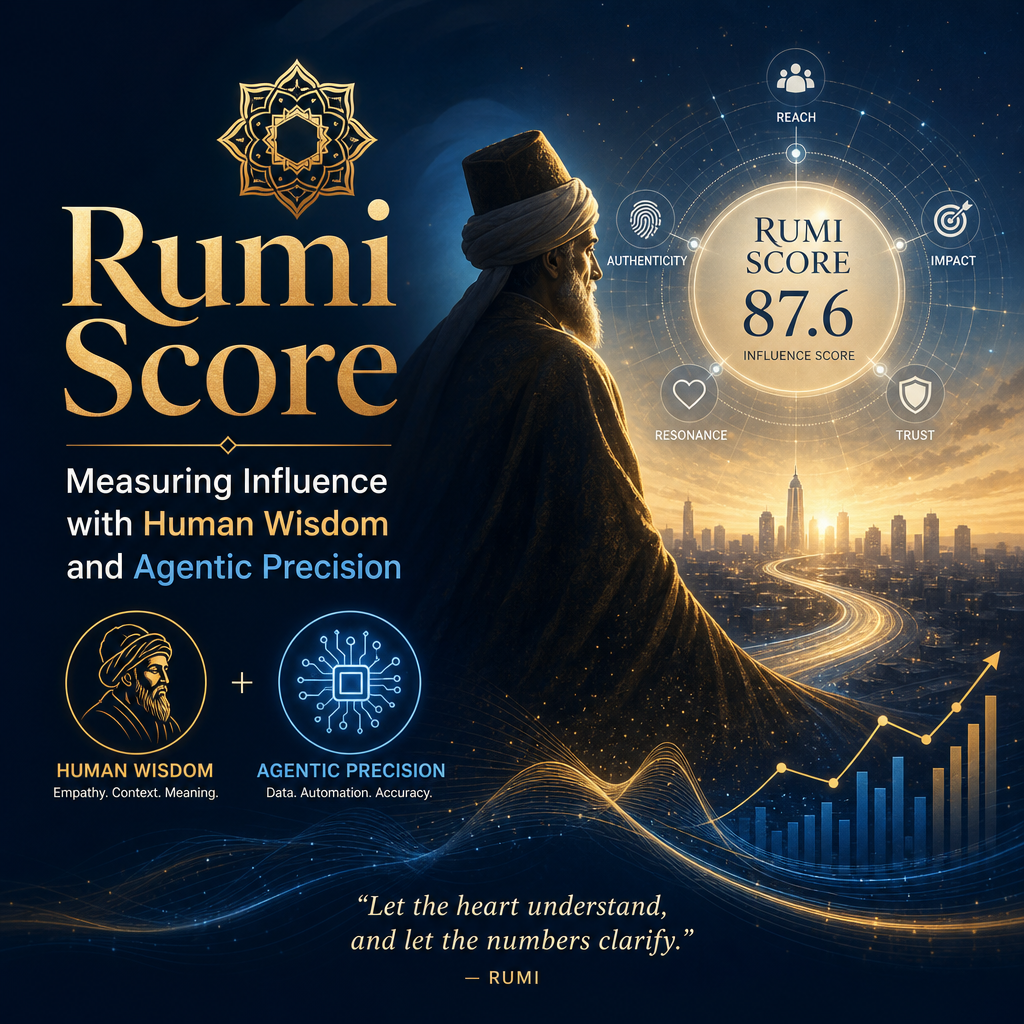
Rumi Score: Measuring Influence with Human Wisdom and Agentic Precision
Inside the Rumi Score: Measuring Influence with Human Wisdom + Agentic Precision
Influence is easy to admire and hard to measure. A viral post can reach thousands, but does it change minds? A trusted expert may have a smaller audience, yet shape decisions in a deeper way. That gap is exactly where the Rumi Score comes in.
The Rumi Score is a modern way to evaluate influence by combining two things that are often kept separate: human wisdom and agentic precision. In other words, it tries to measure not just how far a message travels, but how meaningfully it lands.

Why Influence Needs a Better Measure
Traditional metrics are useful, but they only tell part of the story.

Common measures include:
- Followers
- Likes
- Shares
- Impressions
- Click-through rates
These numbers can show visibility, but visibility is not the same as influence. A person can have high reach and low trust. Another can have a smaller audience and create real behavior change. The Rumi Score is designed to capture that difference.

At its core, the score asks a better question: Who is actually shaping thought, action, and culture?
What the Rumi Score Measures
The Rumi Score blends qualitative judgment with structured analytics. That makes it different from simple engagement formulas.
Human Wisdom: The Qualitative Layer
Human wisdom looks at the deeper signals that numbers often miss. It considers:
- Credibility
- Emotional resonance
- Clarity of ideas
- Ethical consistency
- Long-term trust
- Cultural relevance
This layer recognizes that influence is not only about performance. It is also about judgment, timing, empathy, and the ability to connect ideas to human experience.
Agentic Precision: The Quantitative Layer
Agentic precision brings in data-driven accuracy. It focuses on measurable indicators such as:
- Audience growth quality
- Interaction patterns
- Content persistence over time
- Cross-platform consistency
- Network amplification
- Response-to-content ratios
This part of the Rumi Score helps reduce guesswork. It identifies whether influence is real, repeatable, and scalable rather than accidental or short-lived.
Why the Blend Matters
If you rely only on human judgment, the process can become subjective. If you rely only on automation, you may reward activity without substance. The power of the Rumi Score is that it balances both.
That balance matters because influence is multidimensional. A thought leader may publish infrequently but still shift industry conversations. A creator may not trend constantly, yet build a loyal audience that acts on every recommendation. The score is meant to see both the visible and invisible layers of impact.
How the Rumi Score Works in Practice
Although the exact formula may vary by use case, the logic behind the Rumi Score usually follows a pattern:
- Collect signals from content, engagement, and network behavior.
- Evaluate context using human review, domain expertise, or editorial scoring.
- Weight meaningful actions more heavily than passive ones.
- Compare influence over time instead of relying on a single moment.
- Adjust for authenticity to avoid inflation from bots, noise, or vanity metrics.
This process helps produce a more reliable view of influence. It also makes the score useful across contexts such as personal branding, thought leadership, creator strategy, community building, and organizational communications.
What Makes It Different from Vanity Metrics
Vanity metrics can be seductive because they are easy to count. But they often fail to answer the most important business and cultural questions.
For example:
- Did the audience trust the message?
- Did the content lead to discussion?
- Did it affect decisions?
- Did it strengthen reputation?
- Did it create lasting attention?
The Rumi Score is built to be more demanding. It values depth over noise and consistency over spikes. That makes it especially useful in a world where attention is abundant but trust is scarce.
A More Human Way to Measure Digital Impact
The idea behind the Rumi Score is simple but powerful: influence should be measured with both empathy and accuracy. Human wisdom keeps the score grounded in meaning, while agentic precision keeps it disciplined and actionable.
That combination reflects how real influence works. People do not follow numbers alone. They follow insight, trust, timing, and resonance. They respond to voices that feel credible and alive.
The Future of Influence Measurement
As digital ecosystems become more complex, influence scoring will need to evolve. The best models will not just count interactions. They will interpret them.
The Rumi Score points toward that future. It suggests that the most valuable influence is not the loudest one, but the one that consistently shapes understanding and behavior. In that sense, it is less about chasing attention and more about earning it.
Final Thought
The Rumi Score is more than a metric. It is a framework for understanding influence in a smarter, more human way. By pairing human wisdom + agentic precision, it offers a richer view of what truly matters: not just reach, but relevance; not just activity, but impact.