
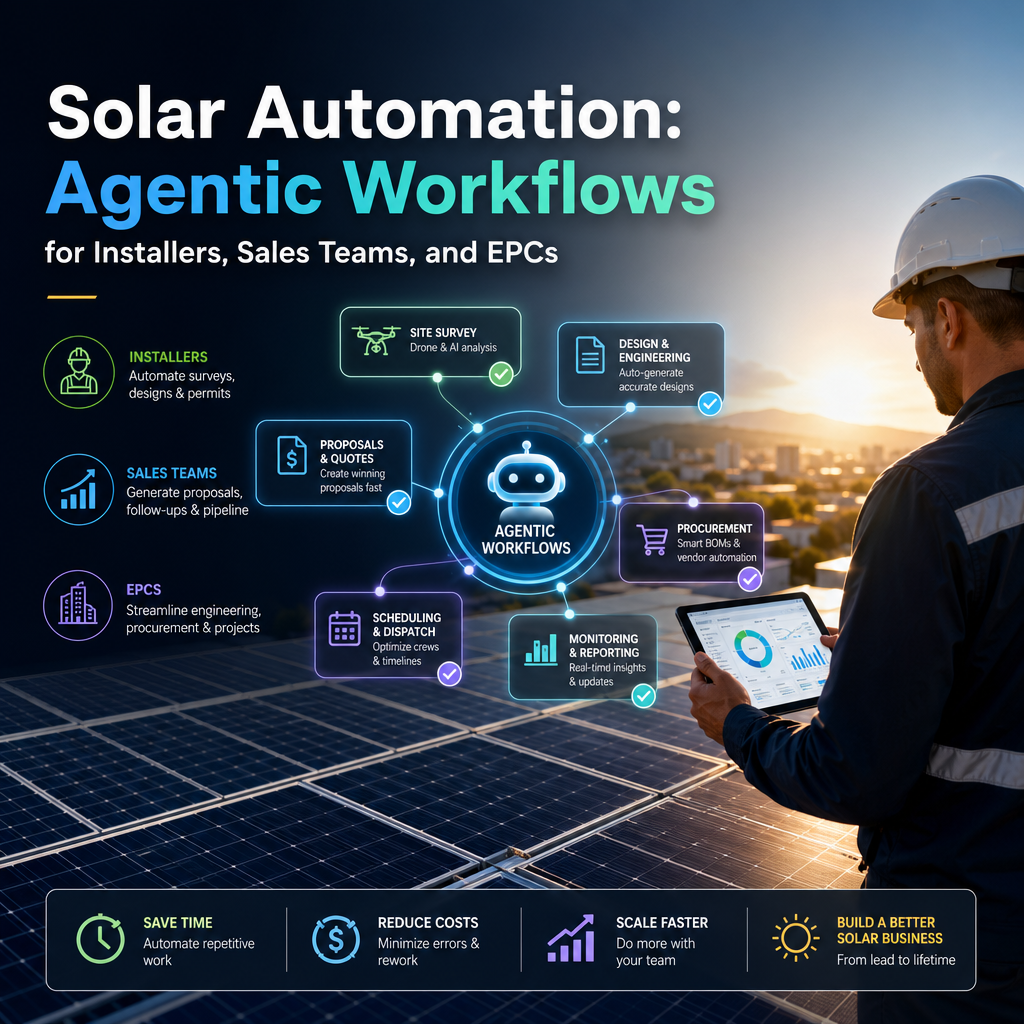
Solar Automation: Agentic Workflows for Installers, Sales Teams, and EPCs
Solar Automation Reinvented: Agentic Workflows for Installers, Sales Teams, and EPCs
Solar companies are under pressure to move faster, reduce errors, and deliver a better customer experience. At the same time, teams are juggling more complexity than ever: lead qualification, site design, permitting, procurement, scheduling, commissioning, and ongoing support.
This is where Solar Automation Reinvented: Agentic Workflows for Installers, Sales Teams, and EPCs becomes more than a buzzphrase. It represents a shift from basic automation to intelligent, task-driven systems that can help teams act faster, coordinate better, and scale without adding unnecessary overhead.

What Makes Agentic Workflows Different?
Traditional automation follows rules. If a form is submitted, send an email. If a document is uploaded, create a task. Useful, yes—but limited.

Agentic workflows go further. They can:
- interpret context
- decide the next best action
- coordinate across tools and teams
- adapt as new information arrives
In solar, that means an AI-enabled workflow can do more than alert someone that a lead exists. It can help qualify the lead, route it to the right rep, generate a proposal, track follow-up, and trigger next steps automatically.

Why Solar Teams Need This Now
The solar industry operates in a high-friction environment. There are multiple stakeholders, compliance requirements, and a lot of handoffs between departments. Even a small delay in one stage can push out the entire project timeline.
Agentic workflows help reduce those bottlenecks by connecting the dots between people, data, and systems.
Common pain points they solve
- Slow lead response times
- Inconsistent sales follow-up
- Manual proposal creation
- Fragmented project handoffs
- Missed permitting or inspection deadlines
- Communication gaps between office and field teams
By automating not just tasks, but decisions and coordination, solar businesses can improve throughput without sacrificing quality.
Benefits for Installers
Installers often deal with the most operational complexity. Every project depends on accurate scheduling, clean documentation, materials arriving on time, and crews showing up with the right information.
Agentic workflows can support installers by:
- confirming job readiness before dispatch
- checking that permits and approvals are complete
- flagging missing equipment or documentation
- updating project status automatically from field inputs
- triggering alerts when delays affect installation windows
This reduces back-and-forth communication and helps crews stay focused on installation instead of administrative cleanup.
Example in the field
Imagine a system that notices a permit has been approved, the inverter has shipped, and the site survey is complete. It can automatically move the project into the scheduling stage, notify the customer, and alert the operations team to assign a crew.
That is not just automation. That is coordinated execution.
Benefits for Sales Teams
For solar sales teams, speed matters. The faster a lead is contacted, qualified, and guided through the buying process, the more likely the deal is to close. But many sales teams still spend too much time on repetitive work.
Agentic workflows can help with:
- lead scoring based on source, property data, and engagement
- routing opportunities to the best rep
- generating personalized follow-up sequences
- drafting proposal content from project inputs
- reminding reps of stalled opportunities
- surfacing upsell or referral opportunities
A smarter sales motion
Instead of manually moving each prospect through the pipeline, the workflow can monitor behavior and recommend action. If a homeowner views a proposal but does not respond, the system can suggest a follow-up message or schedule a call. If a high-value lead comes in from a premium ZIP code, it can prioritize that account instantly.
This creates a sales process that is faster, more responsive, and easier to scale.
Benefits for EPCs
EPCs have the challenge of managing both high-volume operations and complex project coordination. From engineering reviews to procurement and construction, every phase depends on consistent information and timely execution.
Agentic workflows are especially valuable here because they can improve cross-functional alignment.
Key EPC use cases
- automated project intake and validation
- design package checks and routing
- procurement triggers based on approved scope
- milestone tracking across departments
- exception handling for delays or missing assets
- customer updates tied to project progress
This means fewer manual status meetings, fewer overlooked tasks, and better visibility across the project lifecycle.
How to Get Started
You do not need to automate everything at once. The best approach is to start with one high-friction process and build from there.
Good starting points
- Lead qualification and routing
- Proposal generation
- Permitting and document tracking
- Installation scheduling
- Status updates and customer communication
Pick the workflow that creates the most delays or consumes the most manual effort. Then connect the systems involved and define the decision points where the workflow can act on its own.
The Future of Solar Operations
The next wave of growth in solar will not come only from better panels or larger ad budgets. It will come from better execution. Companies that can move quickly, coordinate cleanly, and stay responsive will have the advantage.
That is why Solar Automation Reinvented: Agentic Workflows for Installers, Sales Teams, and EPCs matters. It is a practical way to turn complexity into momentum.
When teams spend less time chasing updates and more time delivering value, everyone benefits: the sales team, the field crew, the project manager, and the customer.
In a competitive market, that kind of efficiency is not optional. It is the new standard.